Move Back
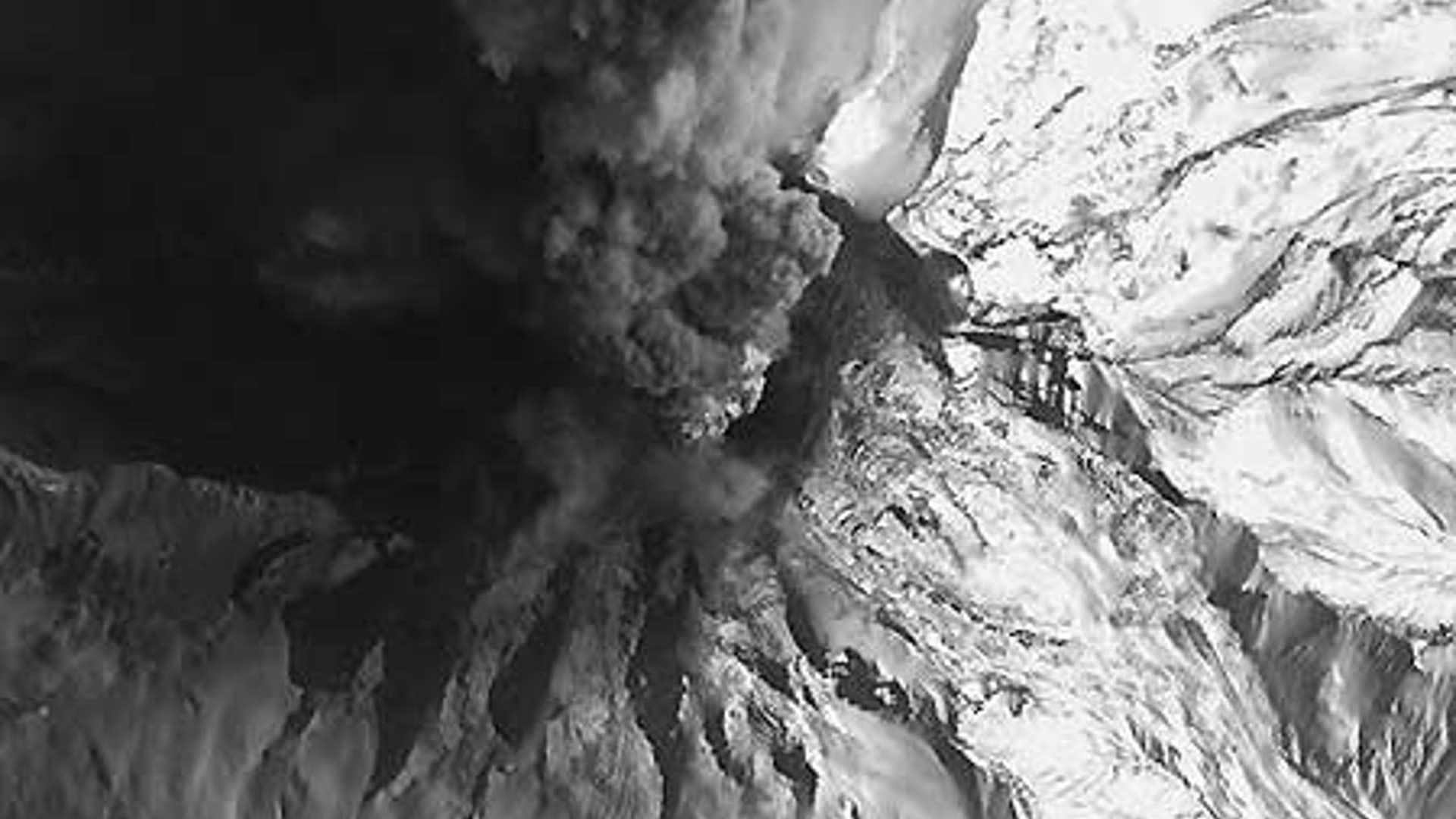
![Rumbling Mount Redoubt]() March 30: This black and white satellite image provided by DigitalGlobe shows Alaska's Mount Redoubt volcano as it emits a steady ash plume. The volcano 100 miles southwest of Anchorage has erupted 18 times since March 22, sending ash in various directions. A light dusting of ash fell for the first time on Anchorage on Saturday.
March 30: This black and white satellite image provided by DigitalGlobe shows Alaska's Mount Redoubt volcano as it emits a steady ash plume. The volcano 100 miles southwest of Anchorage has erupted 18 times since March 22, sending ash in various directions. A light dusting of ash fell for the first time on Anchorage on Saturday.![Rumbling Mount Redoubt]() March 30: This satellite image provided by GeoEye shows Alaska's Mount Redoubt volcano as it emits a steady ash plume. The volcano 100 miles southwest of Anchorage has erupted 18 times since March 22, sending ash in various directions. A light dusting of ash fell for the first time on Anchorage on Saturday.
March 30: This satellite image provided by GeoEye shows Alaska's Mount Redoubt volcano as it emits a steady ash plume. The volcano 100 miles southwest of Anchorage has erupted 18 times since March 22, sending ash in various directions. A light dusting of ash fell for the first time on Anchorage on Saturday.![Rumbling Mount Redoubt]() March 30: This black and white satellite image provided by DigitalGlobe shows Alaska's Mount Redoubt volcano as it emits a steady ash plume. The volcano 100 miles southwest of Anchorage has erupted 18 times since March 22, sending ash in various directions. A light dusting of ash fell for the first time on Anchorage on Saturday.
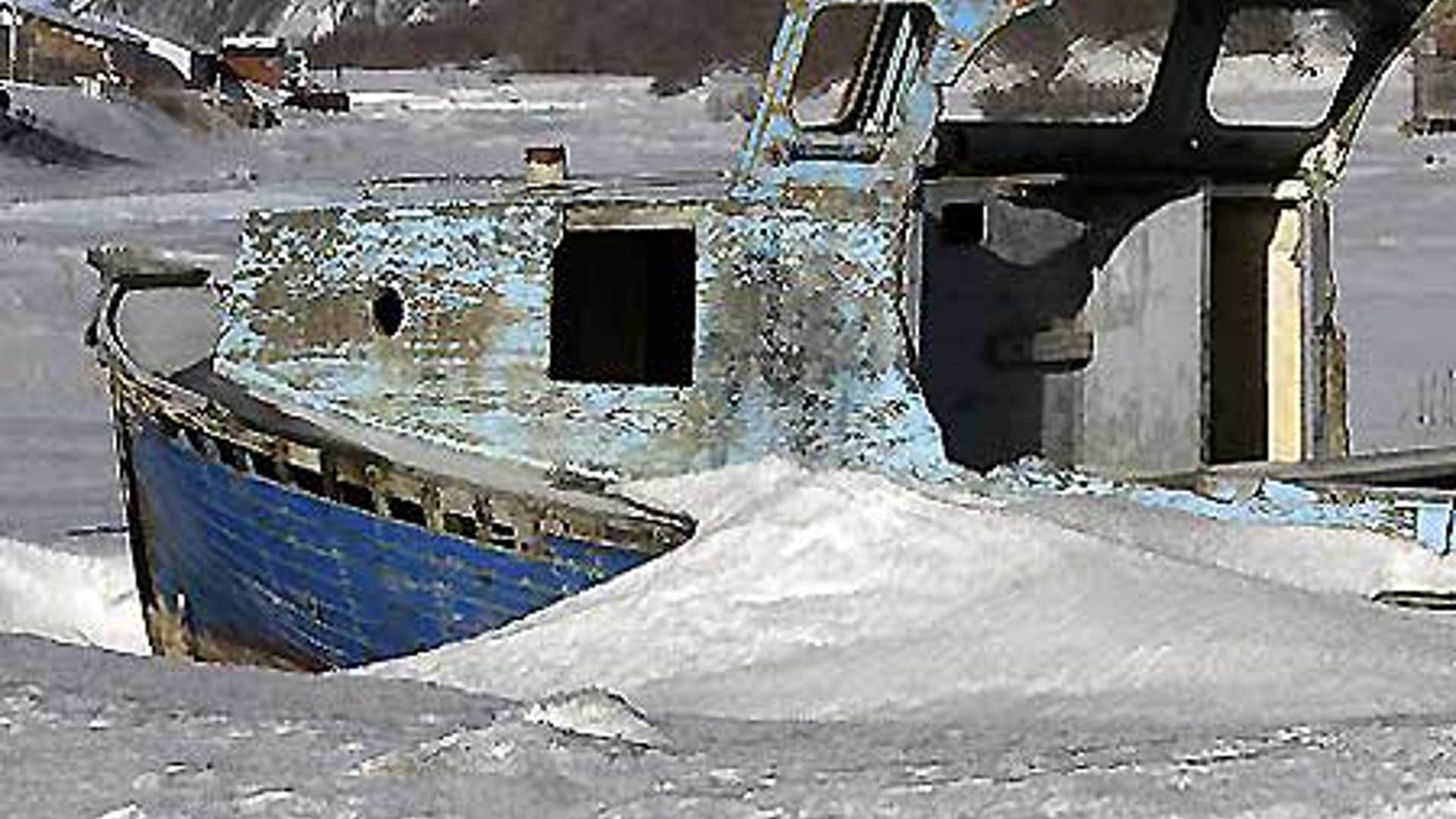
March 30: This black and white satellite image provided by DigitalGlobe shows Alaska's Mount Redoubt volcano as it emits a steady ash plume. The volcano 100 miles southwest of Anchorage has erupted 18 times since March 22, sending ash in various directions. A light dusting of ash fell for the first time on Anchorage on Saturday.![Rumbling Mount Redoubt]() March 26: Ash from Mount Redoubt blankets the snow drifts against an old fishing boat and the town of Ninilchik, Alaska. The volcano on the west side of Cook Inlet erupted Thursday morning sending ash clouds an estimated 65,000 feet into the air dusting the towns on the Kenai Peninsula including the towns of Kenai, Ninilchik and Homer.
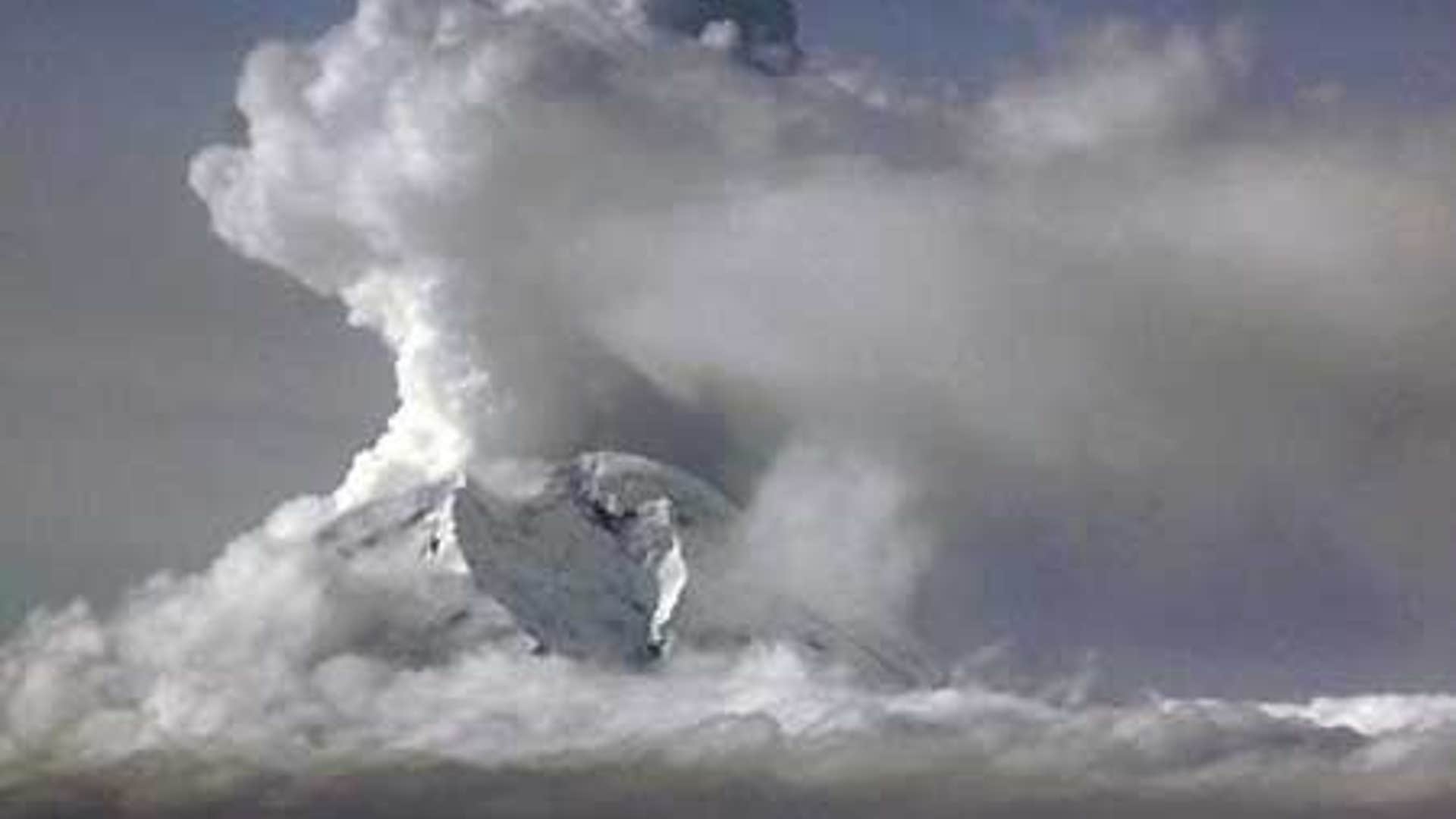
March 26: Ash from Mount Redoubt blankets the snow drifts against an old fishing boat and the town of Ninilchik, Alaska. The volcano on the west side of Cook Inlet erupted Thursday morning sending ash clouds an estimated 65,000 feet into the air dusting the towns on the Kenai Peninsula including the towns of Kenai, Ninilchik and Homer.![Rumbling Mount Redoubt]() March 26: Mount Redoubt bellows steam and ash across the Cook Inlet from Ninilchik, Alaska. Ash from the volcano is seen on the snow. The volcano on the west side of Cook Inlet erupted Thursday morning sending ash clouds an estimated 65,000 feet (nearly 20 kms) into the air dusting the towns on the Kenai Peninsula including the towns of Kenai, Ninilchik and Homer.
March 26: Mount Redoubt bellows steam and ash across the Cook Inlet from Ninilchik, Alaska. Ash from the volcano is seen on the snow. The volcano on the west side of Cook Inlet erupted Thursday morning sending ash clouds an estimated 65,000 feet (nearly 20 kms) into the air dusting the towns on the Kenai Peninsula including the towns of Kenai, Ninilchik and Homer.![Rumbling Mount Redoubt]() March 26: Foot prints in the ash from Mount Redoubt lead up the hill to the Russian Orthodox church in Ninilchik, Alaska. The volcano on the west side of Cook Inlet erupted Thursday morning sending ash clouds an estimated 65,000 feet (nearly 20 kilometers) into the air dusting the towns on the Kenai Peninsula including the towns of Kenai, Ninilchik and Homer.
March 26: Foot prints in the ash from Mount Redoubt lead up the hill to the Russian Orthodox church in Ninilchik, Alaska. The volcano on the west side of Cook Inlet erupted Thursday morning sending ash clouds an estimated 65,000 feet (nearly 20 kilometers) into the air dusting the towns on the Kenai Peninsula including the towns of Kenai, Ninilchik and Homer.![Rumbling Mount Redoubt]() March 26: Steam bellows from Mount Redoubt as seen from Kenai, Alaska. The volcano on the west side of Cook Inlet erupted Thursday morning sending ash clouds an estimated 65,000 feet (almost 20 kilometers) into the air and is expected to affect the towns of Kenai and Homer.
March 26: Steam bellows from Mount Redoubt as seen from Kenai, Alaska. The volcano on the west side of Cook Inlet erupted Thursday morning sending ash clouds an estimated 65,000 feet (almost 20 kilometers) into the air and is expected to affect the towns of Kenai and Homer.![Rumbling Mount Redoubt]() March 26: The eruption of Mount Redoubt Thursday morning sent an ash cloud 65,000 feet above sea level the Alaska Volcano Observatory reported.
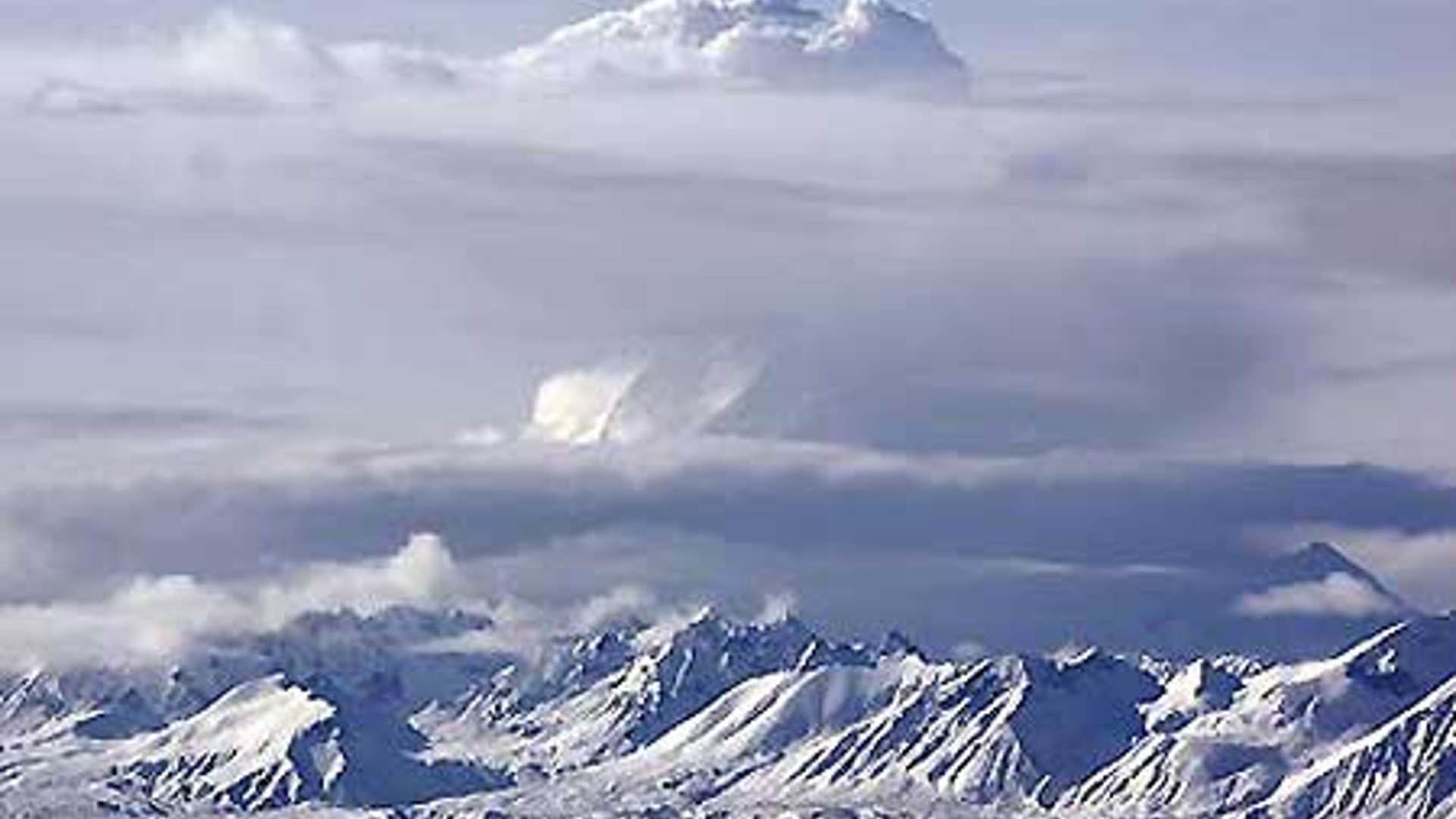
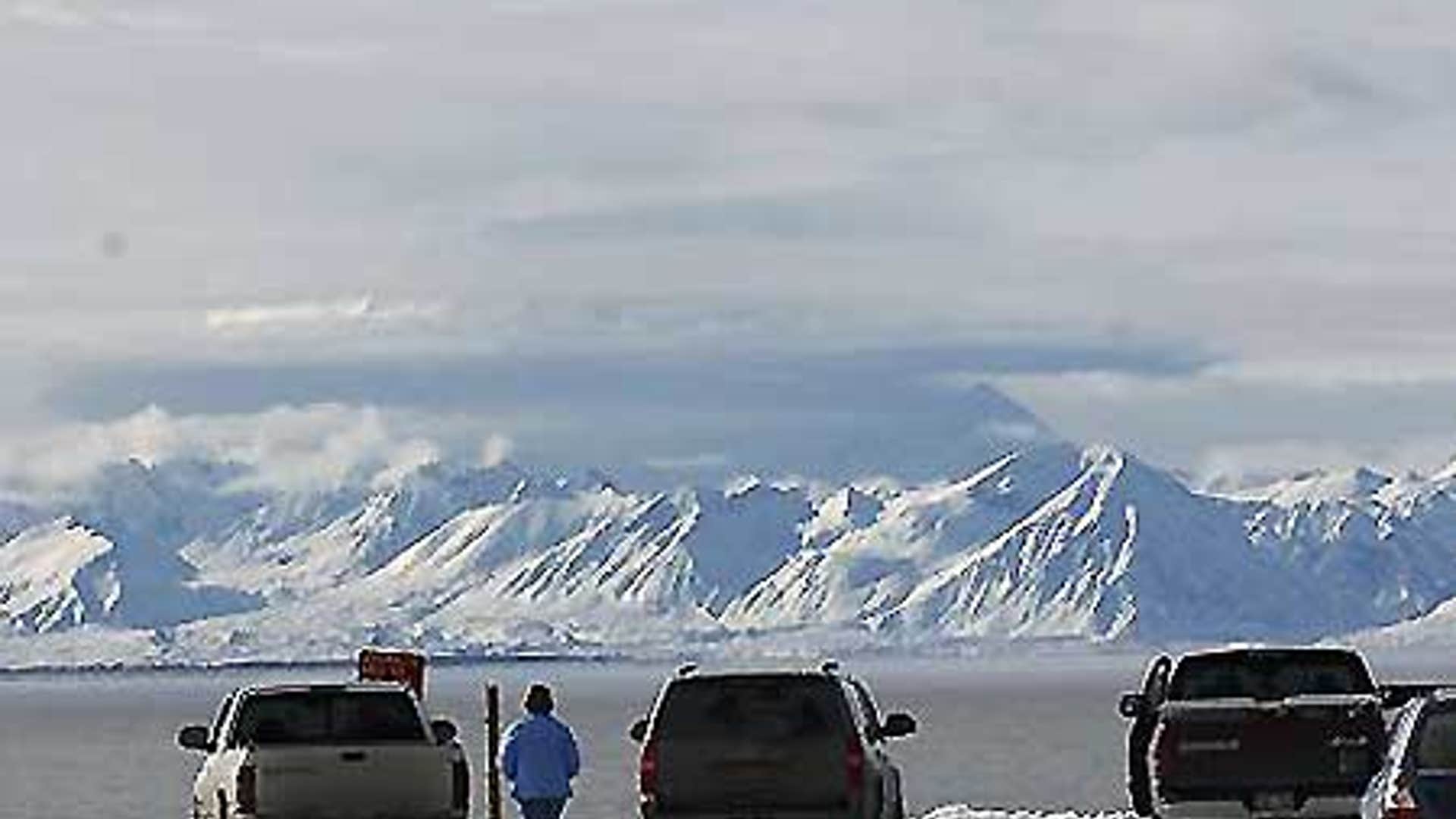
March 26: The eruption of Mount Redoubt Thursday morning sent an ash cloud 65,000 feet above sea level the Alaska Volcano Observatory reported.![Rumbling Mount Redoubt]() March 26: Mount Redoubt is seen from Kenai, Alaska. The volcano erupted Thursday morning sending ash clouds an estimated 65,000 feet into the air and is expected to effect the towns of Kenai and Homer.
March 26: Mount Redoubt is seen from Kenai, Alaska. The volcano erupted Thursday morning sending ash clouds an estimated 65,000 feet into the air and is expected to effect the towns of Kenai and Homer.![Rumbling Mount Redoubt]() March 26: People watch as Mount Redoubt bellows steam as seen from Kenai, Alaska. The volcano on the west side of Cook Inlet erupted Thursday morning sending ash clouds an estimated 65,000 feet into the air and is expected to affect the towns of Kenai and Homer.
March 26: People watch as Mount Redoubt bellows steam as seen from Kenai, Alaska. The volcano on the west side of Cook Inlet erupted Thursday morning sending ash clouds an estimated 65,000 feet into the air and is expected to affect the towns of Kenai and Homer.![Rumbling Mount Redoubt]() March 26: Ash from Mount Redoubt blankets the snow drifts against an old fishing boat in Ninilchik, Alaska. The volcano on the west side of Cook Inlet erupted Thursday morning sending ash clouds an estimated 65,000 feet into the air dusting the towns on the Kenai Peninsula including the towns of Kenai, Ninilchik and Homer.
March 26: Ash from Mount Redoubt blankets the snow drifts against an old fishing boat in Ninilchik, Alaska. The volcano on the west side of Cook Inlet erupted Thursday morning sending ash clouds an estimated 65,000 feet into the air dusting the towns on the Kenai Peninsula including the towns of Kenai, Ninilchik and Homer.![Rumbling Mount Redoubt]() March 21: Steam rises from the top vent in the summit crater of Alaska's Mount Redoubt.
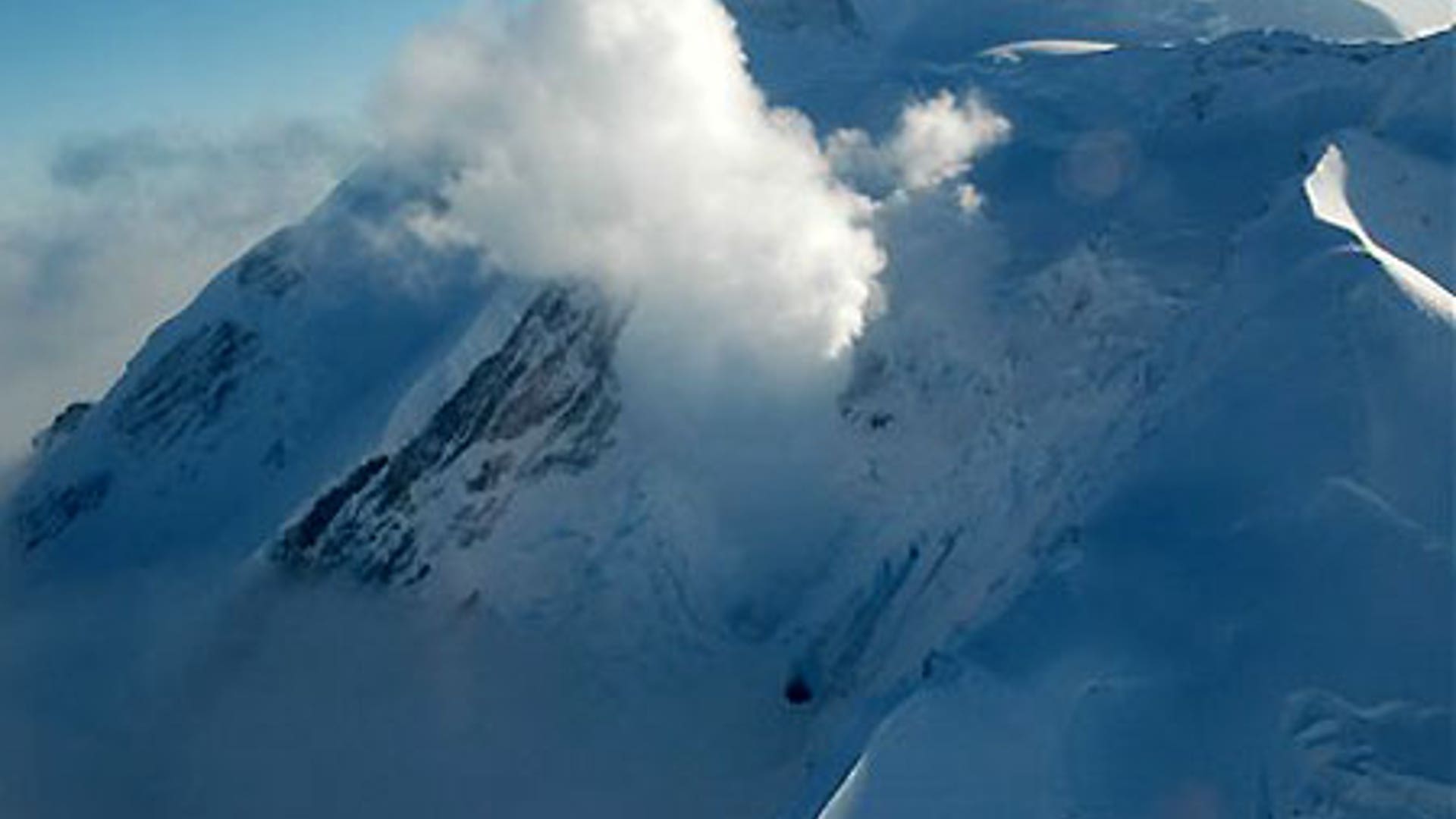
March 21: Steam rises from the top vent in the summit crater of Alaska's Mount Redoubt.![Rumbling Mount Redoubt]() This March 15, 2009, photo released by the Alaska Volcano Observatory / U.S. Geological Survey shows Mount Redoubt looking south at the north flank near Kenai, Alaska. The volcano erupted three times staring Sunday night March 22, 2009, sending an ash cloud an estimated 50,000 feet into the air. The Ash cloud is expected to reach the Susitna Valley including Talkeetna, and Willow about 90 miles north of Anchorage.
This March 15, 2009, photo released by the Alaska Volcano Observatory / U.S. Geological Survey shows Mount Redoubt looking south at the north flank near Kenai, Alaska. The volcano erupted three times staring Sunday night March 22, 2009, sending an ash cloud an estimated 50,000 feet into the air. The Ash cloud is expected to reach the Susitna Valley including Talkeetna, and Willow about 90 miles north of Anchorage.![Rumbling Mount Redoubt]() This Feb. 7, 2009 photo provided by the Alaska Volcano Observatory shows steam from Redoubt Volcano on the north flank in Alaska. Stephanie Prejean, a seismologist at the observatory, said on Monday Feb. 9, 2009 that Redoubt's ongoing earthquakes have shifted in recent days to a higher frequency, which could signify actual rock breaking.
This Feb. 7, 2009 photo provided by the Alaska Volcano Observatory shows steam from Redoubt Volcano on the north flank in Alaska. Stephanie Prejean, a seismologist at the observatory, said on Monday Feb. 9, 2009 that Redoubt's ongoing earthquakes have shifted in recent days to a higher frequency, which could signify actual rock breaking.![Rumbling Mount Redoubt]() This Feb. 7, 2009 photo provided by the Alaska Volcano Observatory shows steam from Redoubt Volcano in Alaska on the north flank moving over the south-southwest upper ridge. Stephanie Prejean, a seismologist at the observatory, said on Monday Feb. 9, 2009 that Redoubt's ongoing earthquakes have shifted in recent days to a higher frequency, which could signify actual rock breaking.
This Feb. 7, 2009 photo provided by the Alaska Volcano Observatory shows steam from Redoubt Volcano in Alaska on the north flank moving over the south-southwest upper ridge. Stephanie Prejean, a seismologist at the observatory, said on Monday Feb. 9, 2009 that Redoubt's ongoing earthquakes have shifted in recent days to a higher frequency, which could signify actual rock breaking.![Rumbling Mount Redoubt]() Feb. 1: Mount Redoubt, a 10,197-foot volcano in the Chigmit Mountains, vents steam near Anchorage, Alaska. Alaska's Mount Redoubt continued to rumble and emit steam Sunday but showed no dramatic burst of energy from the previous day, geologists monitoring the volcano said. Mount Katmai can be seen behind in the distance.
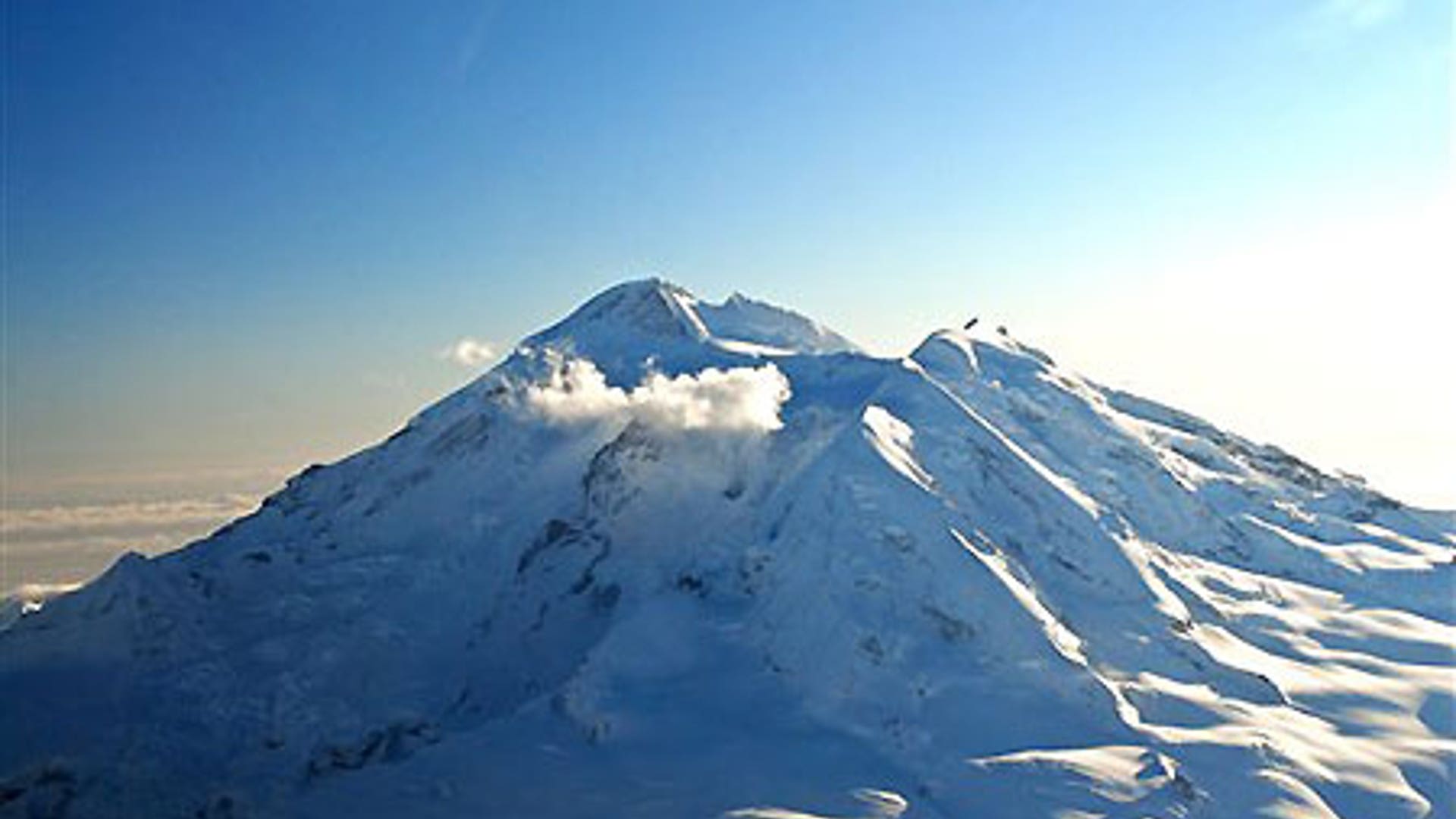
Feb. 1: Mount Redoubt, a 10,197-foot volcano in the Chigmit Mountains, vents steam near Anchorage, Alaska. Alaska's Mount Redoubt continued to rumble and emit steam Sunday but showed no dramatic burst of energy from the previous day, geologists monitoring the volcano said. Mount Katmai can be seen behind in the distance.![Rumbling Mount Redoubt]() Feb. 1: This aerial photo shows steam venting from Mount Redoubt near Anchorage, Alaska. Alaska's Mount Redoubt continued to rumble and emit steam Sunday but showed no dramatic burst of energy from the previous day, geologists monitoring the volcano said.
Feb. 1: This aerial photo shows steam venting from Mount Redoubt near Anchorage, Alaska. Alaska's Mount Redoubt continued to rumble and emit steam Sunday but showed no dramatic burst of energy from the previous day, geologists monitoring the volcano said.![Rumbling Mount Redoubt]() Feb. 1: This aerial photo shows Mount Redoubt venting steam near Anchorage, Alaska. Alaska's Mount Redoubt continued to rumble and emit steam Sunday but showed no dramatic burst of energy from the previous day, geologists monitoring the volcano said.
Feb. 1: This aerial photo shows Mount Redoubt venting steam near Anchorage, Alaska. Alaska's Mount Redoubt continued to rumble and emit steam Sunday but showed no dramatic burst of energy from the previous day, geologists monitoring the volcano said.![Rumbling Mount Redoubt]() Jan. 30: This image provided by the Alaska Volcano Observatory/U.S. Geological Survey shows the Redoubt Volcano near Anchorage, Alaska. Scientists with the Alaska Volcano Observatory on Friday flew close to Drift Glacier and saw vigorous steaming emitted from a football-size area on the north side of the mountain. By Saturday, they had confirmed the area was a fumarole, an opening in the earth that emits gases and steam, and that it had doubled overnight.
Jan. 30: This image provided by the Alaska Volcano Observatory/U.S. Geological Survey shows the Redoubt Volcano near Anchorage, Alaska. Scientists with the Alaska Volcano Observatory on Friday flew close to Drift Glacier and saw vigorous steaming emitted from a football-size area on the north side of the mountain. By Saturday, they had confirmed the area was a fumarole, an opening in the earth that emits gases and steam, and that it had doubled overnight.![Rumbling Mount Redoubt]() In a January 27, 2009 file photo provided by the Alaska Volcano Observatory/U.S.G.S. steam and gas rise from a large fumerole on the north flank of Mount Redoubt, a 10,197-foot volcano in the Chigmit Mountains, in Alaska. Geologists at the Alaska Volcano Observatory say the volcano erupted three times late Sunday March 22, 2009 and early Monday, with the largest eruption sending a plume of smoke some 50,000 feet above sea level.
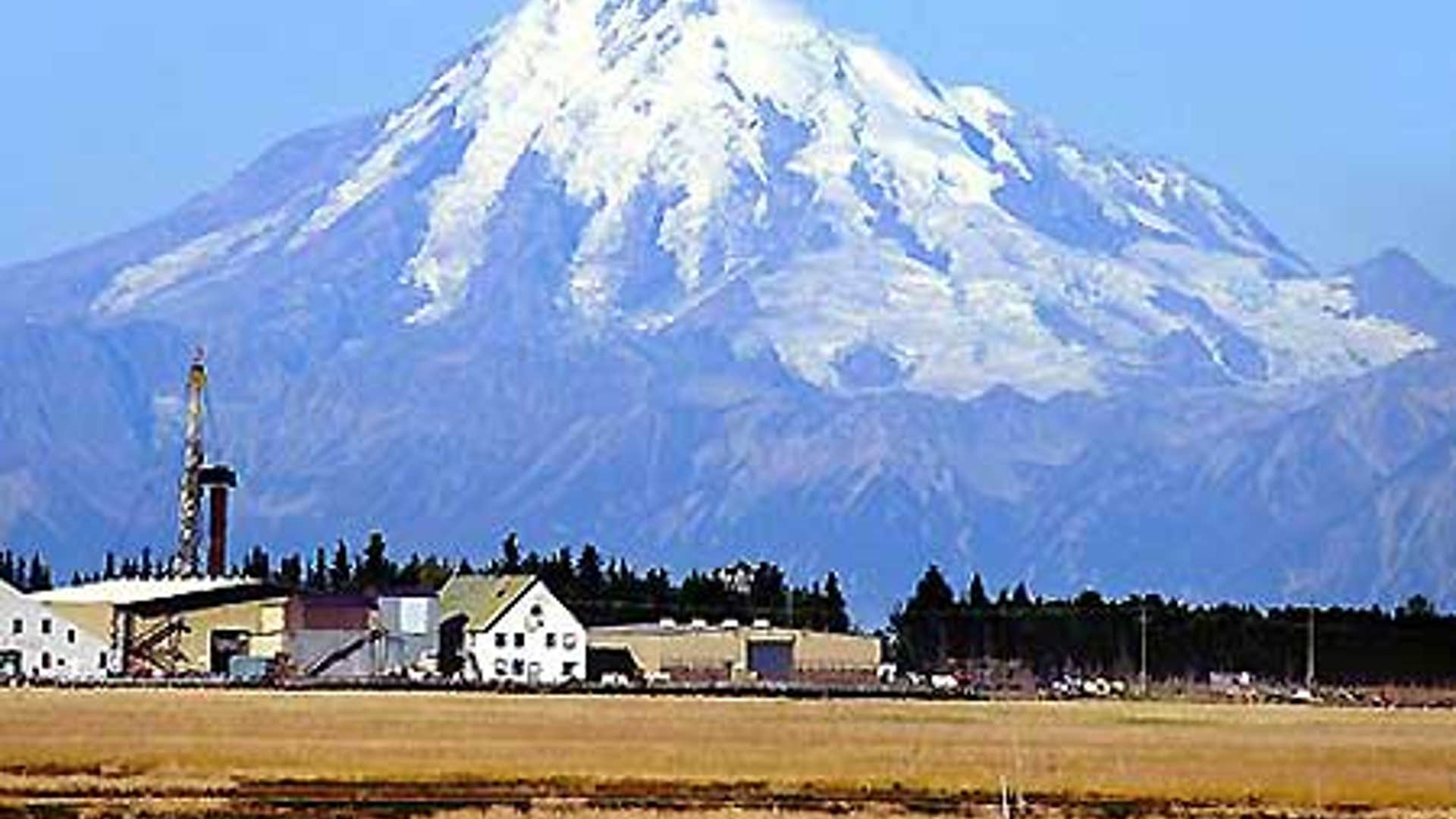
In a January 27, 2009 file photo provided by the Alaska Volcano Observatory/U.S.G.S. steam and gas rise from a large fumerole on the north flank of Mount Redoubt, a 10,197-foot volcano in the Chigmit Mountains, in Alaska. Geologists at the Alaska Volcano Observatory say the volcano erupted three times late Sunday March 22, 2009 and early Monday, with the largest eruption sending a plume of smoke some 50,000 feet above sea level.![Rumbling Mount Redoubt]() Sept. 6, 2004: Redoubt Volcano looms behind a fish processing plant on the Kenai River, in Kenai, Alaska. The volcano, about 100 miles southwest of Anchorage, is rumbling and simmering, prompting geologists to warn that an eruption may be imminent.
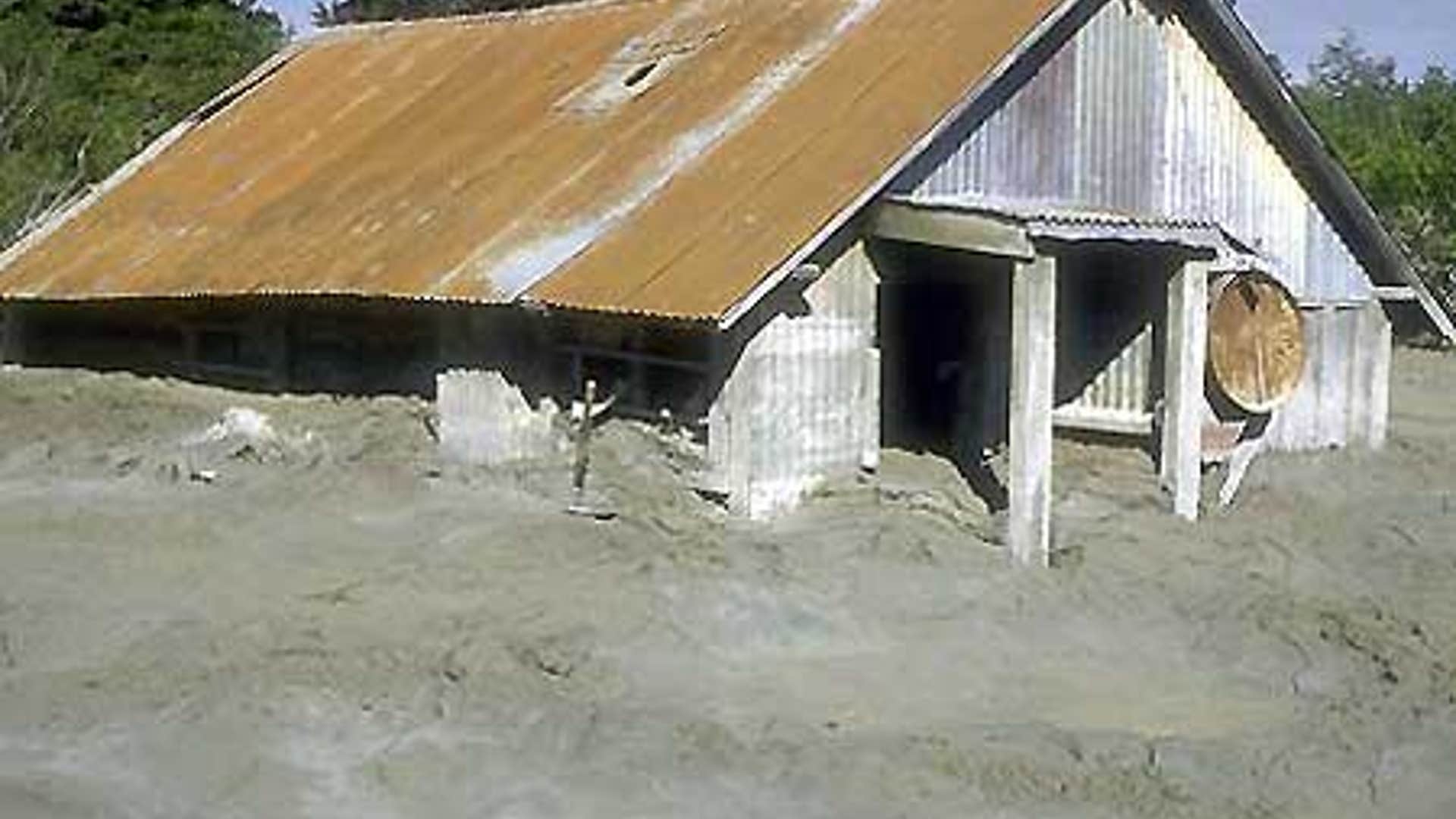
Sept. 6, 2004: Redoubt Volcano looms behind a fish processing plant on the Kenai River, in Kenai, Alaska. The volcano, about 100 miles southwest of Anchorage, is rumbling and simmering, prompting geologists to warn that an eruption may be imminent.![Rumbling Mount Redoubt]() June 1, 1990: A structure near the mouth of Drift River 22 miles from the Redoubt Volcano is buried in frozen mud streams from the 1989 to 1990 eruptions of the volcano.
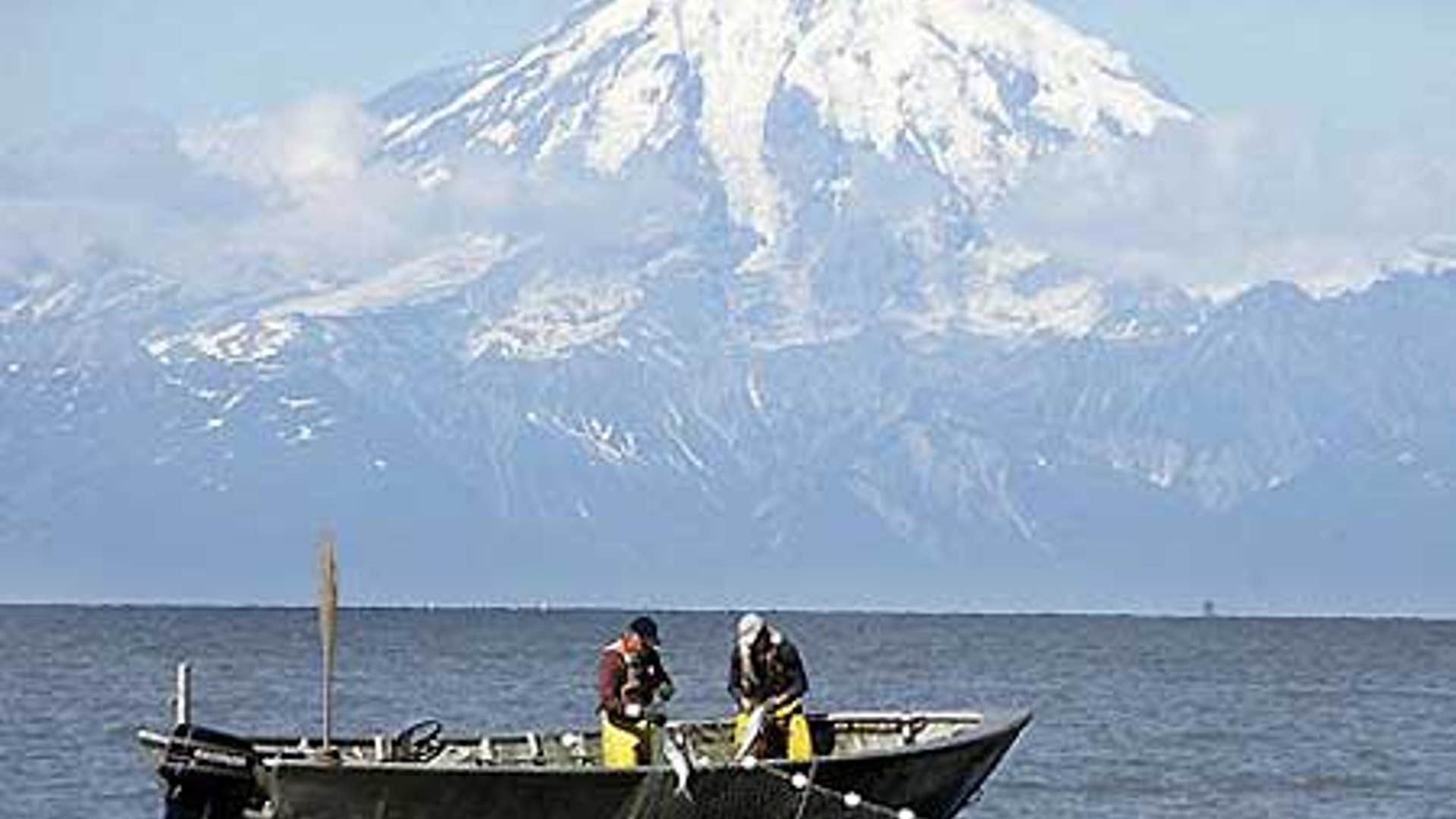
June 1, 1990: A structure near the mouth of Drift River 22 miles from the Redoubt Volcano is buried in frozen mud streams from the 1989 to 1990 eruptions of the volcano.![Rumbling Mount Redoubt]() 2005: Two fishermen pick red salmon from their nets in Cook Inlet off Clam Gulch, Alaska, with the Redoubt Volcano in the background. The volcano, about 100 miles soutwest of Anchorage, is now rumbling and simmering, prompting geologists to warn that an eruption may be imminent.
2005: Two fishermen pick red salmon from their nets in Cook Inlet off Clam Gulch, Alaska, with the Redoubt Volcano in the background. The volcano, about 100 miles soutwest of Anchorage, is now rumbling and simmering, prompting geologists to warn that an eruption may be imminent.![Rumbling Mount Redoubt]() Jan. 29 2009: Elizabeth Ketting looks at dust masks at the Alaska Industrial Hardware store in Anchorage, Alaska as she and others make preparation in case the Mount Redoubt volcano erupts. The volcano 100 miles southwest of Anchorage, is rumbling and simmering, prompting geologists to warn that an eruption may be imminent.
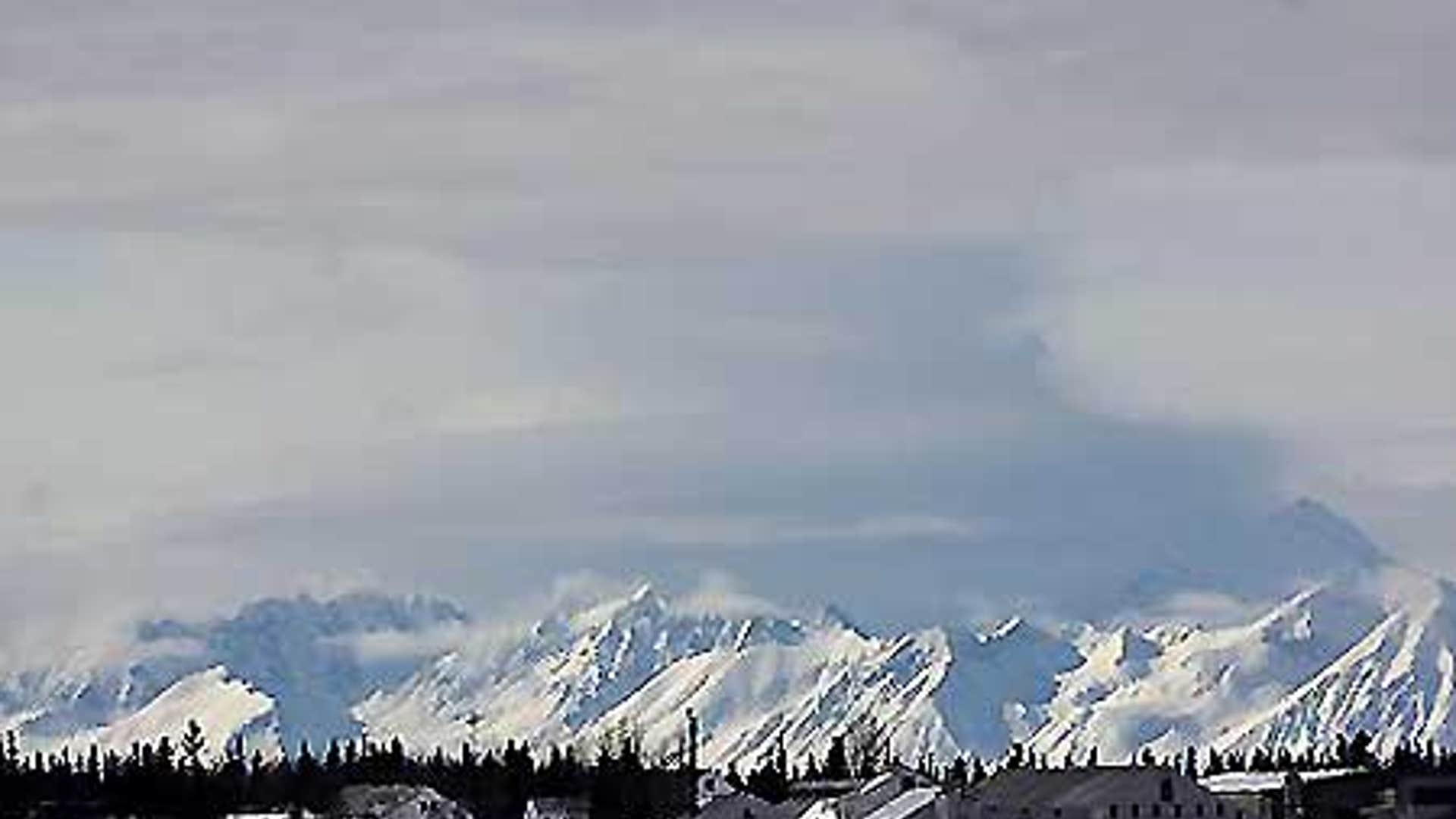
Jan. 29 2009: Elizabeth Ketting looks at dust masks at the Alaska Industrial Hardware store in Anchorage, Alaska as she and others make preparation in case the Mount Redoubt volcano erupts. The volcano 100 miles southwest of Anchorage, is rumbling and simmering, prompting geologists to warn that an eruption may be imminent.![Rumbling Mount Redoubt]() Jan. 27, 2009: Rolling fog on Cook Inlet at Kenai, Alaska, partially obscures the 10,197-foot Mount Redoubt volcano at sunset. Scientists at the Alaska Volcano Observatory say that an eruption is possible.
Jan. 27, 2009: Rolling fog on Cook Inlet at Kenai, Alaska, partially obscures the 10,197-foot Mount Redoubt volcano at sunset. Scientists at the Alaska Volcano Observatory say that an eruption is possible.![Rumbling Mount Redoubt]() April 5, 1990: A lava dome the last of a series of 14 lava domes that erupted in 1989 to 1990 is precariously perched high on Redoubt Volcano's steep north flank. Each of the previous domes were destroyed as they collapsed down the north flank and across a glacier. The hot lava rocks carried by the pyroclastic flows melted snow and ice quickly and generated frozen mud flows that swept down Drift River valley. This dome (dark mound in center) began erupting four days earlier on April 21, and is about 328 ft. in diameter.
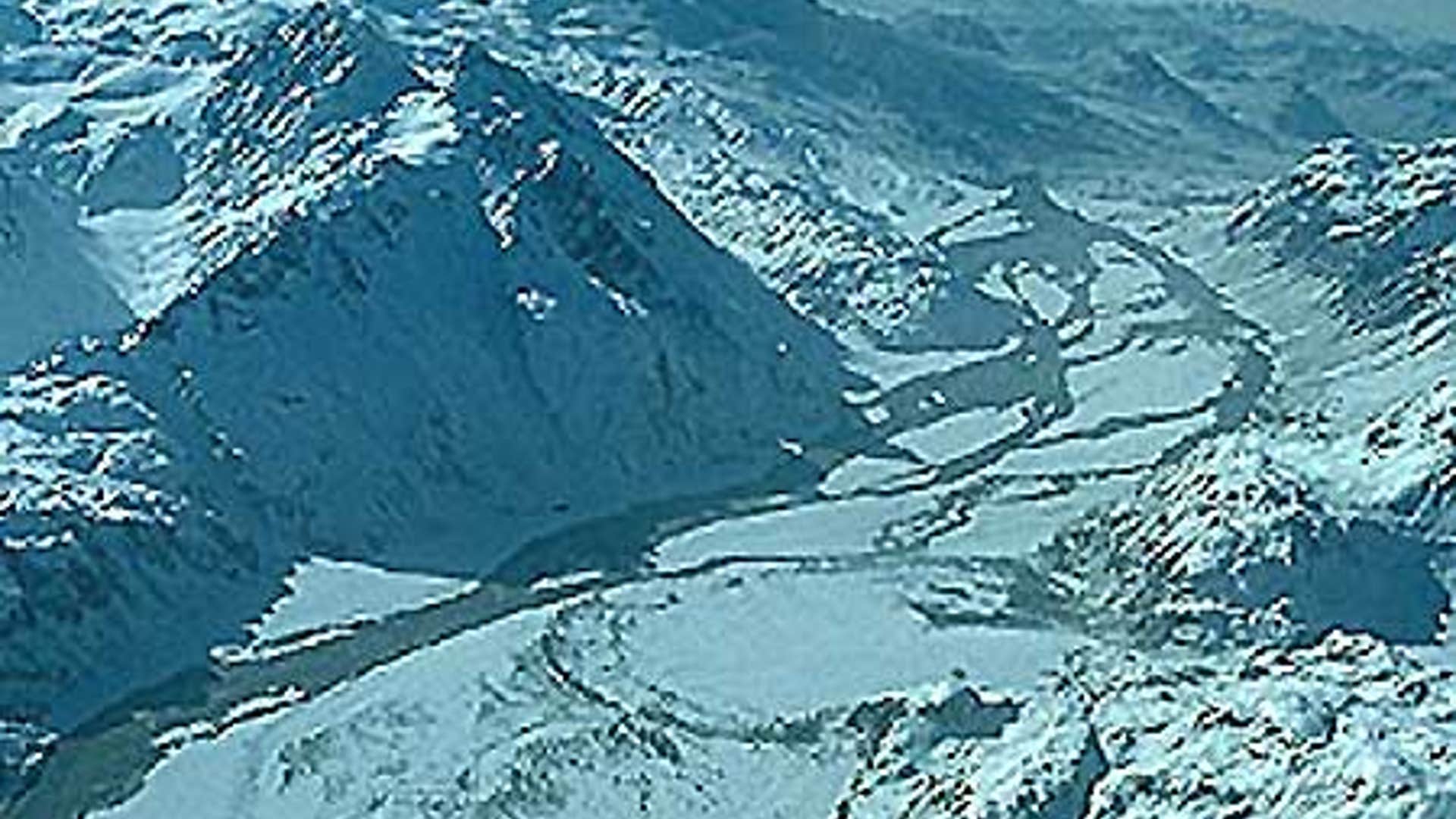
April 5, 1990: A lava dome the last of a series of 14 lava domes that erupted in 1989 to 1990 is precariously perched high on Redoubt Volcano's steep north flank. Each of the previous domes were destroyed as they collapsed down the north flank and across a glacier. The hot lava rocks carried by the pyroclastic flows melted snow and ice quickly and generated frozen mud flows that swept down Drift River valley. This dome (dark mound in center) began erupting four days earlier on April 21, and is about 328 ft. in diameter.![Rumbling Mount Redoubt]() March 10, 1990: Dark pathways of a frozen mud flow streak the snow-covered Drift River valley after a lava dome collapsed down the steep north flank of Redoubt Volcano. This relatively small mud flow swept 22 miles down Drift River valley to Cook Inlet. A few of the flows were large enough to inundate the entire valley floor, which is about 1.2 miles wide in this photograph.
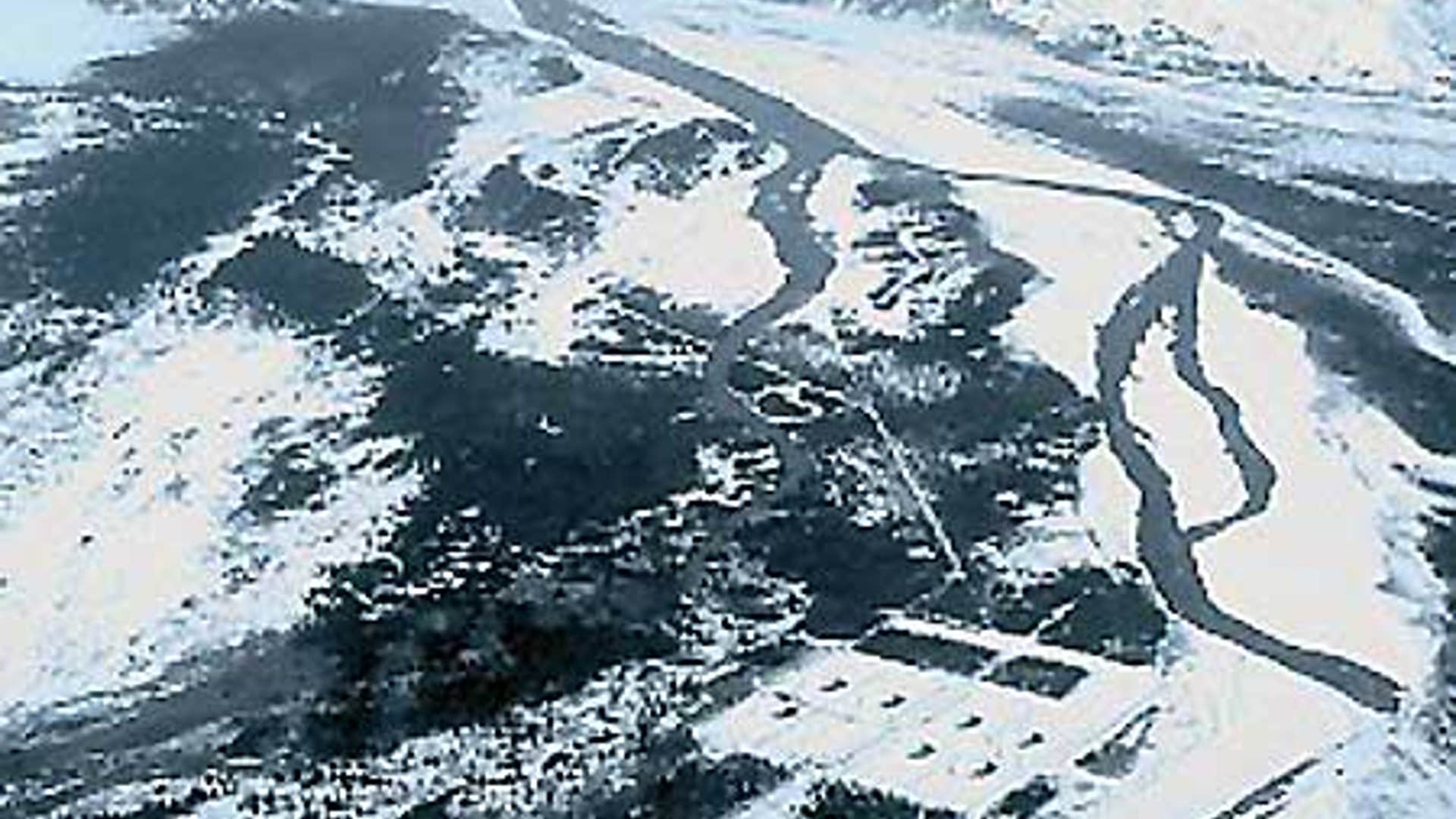
March 10, 1990: Dark pathways of a frozen mud flow streak the snow-covered Drift River valley after a lava dome collapsed down the steep north flank of Redoubt Volcano. This relatively small mud flow swept 22 miles down Drift River valley to Cook Inlet. A few of the flows were large enough to inundate the entire valley floor, which is about 1.2 miles wide in this photograph.![Rumbling Mount Redoubt]() March 10, 1990: Dark pathways of frozen mud flows move past an oil terminal marked by the white rectangle in the lower center of the photograph. As the flow moved down Drift River, it became diluted with additional snow melt and passed on both sides of the facility. Flows triggered by the growth and subsequent collapse of Redoubt's many lava domes generated concern about the safety of the oil tanks and people working at the site.
March 10, 1990: Dark pathways of frozen mud flows move past an oil terminal marked by the white rectangle in the lower center of the photograph. As the flow moved down Drift River, it became diluted with additional snow melt and passed on both sides of the facility. Flows triggered by the growth and subsequent collapse of Redoubt's many lava domes generated concern about the safety of the oil tanks and people working at the site.![Rumbling Mount Redoubt]() April 23, 1990: In hopes of detecting and tracking frozen mud flows as they moved down the Drift River scientists installed 3 seismometers sensitive to ground vibration at relatively high frequencies along the edge of the valley. The sensors are called acoustic-flow monitors (AFM) to distinguish them from traditional seismometers. The AFM's were installed at increasing distances from the volcano the nearest station at the base of the volcano was installed about 5.5 miles from the dome.
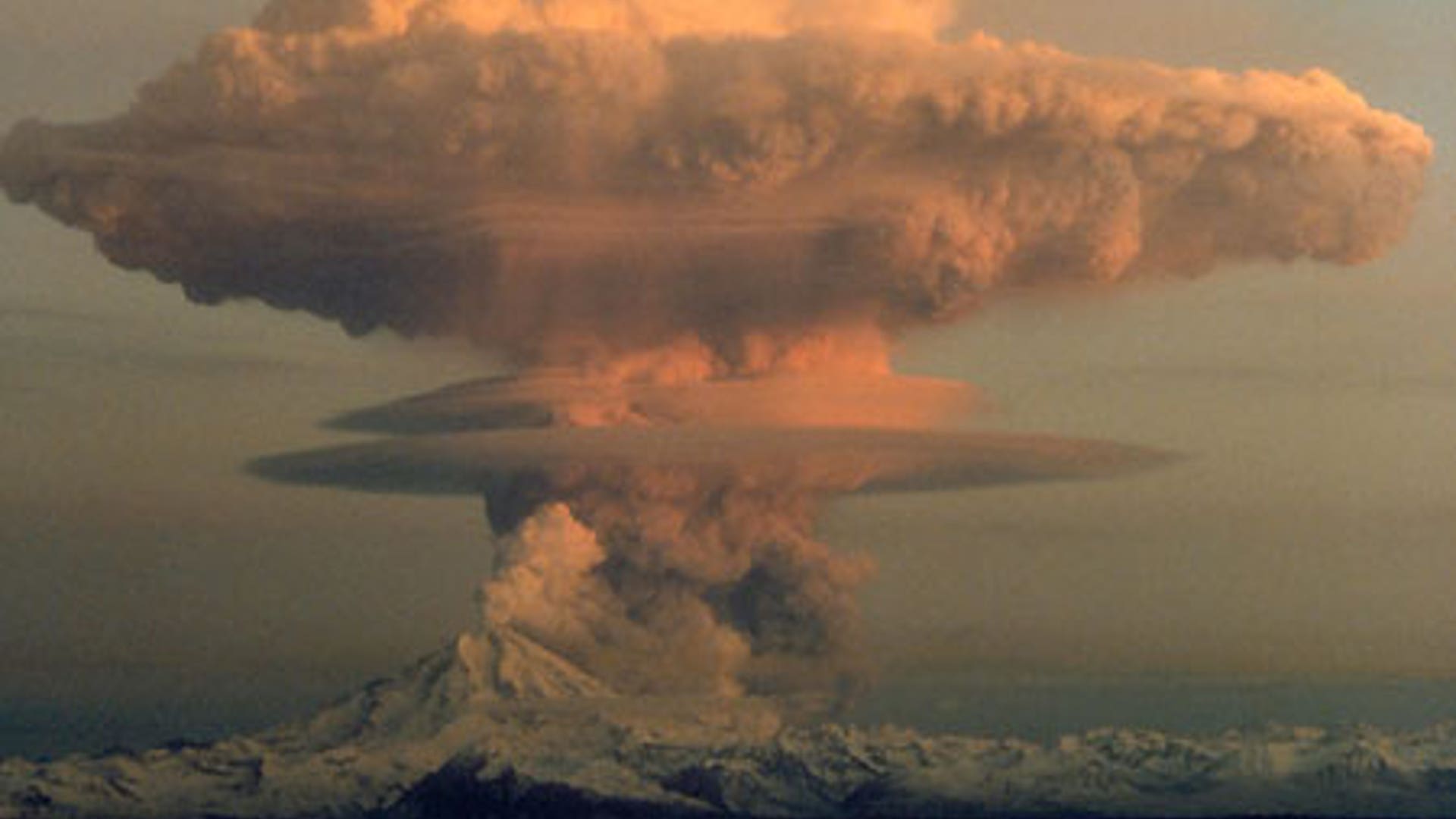
April 23, 1990: In hopes of detecting and tracking frozen mud flows as they moved down the Drift River scientists installed 3 seismometers sensitive to ground vibration at relatively high frequencies along the edge of the valley. The sensors are called acoustic-flow monitors (AFM) to distinguish them from traditional seismometers. The AFM's were installed at increasing distances from the volcano the nearest station at the base of the volcano was installed about 5.5 miles from the dome.![Rumbling Mount Redoubt]() April 21, 1990: Ascending eruption cloud from Redoubt Volcano as viewed to the west from the Kenai Peninsula. The mushroom-shaped plume rose from avalanches of hot debris (pyroclastic flows) that cascaded down the north flank of the volcano. A smaller, white steam plume rises from the summit crater.
April 21, 1990: Ascending eruption cloud from Redoubt Volcano as viewed to the west from the Kenai Peninsula. The mushroom-shaped plume rose from avalanches of hot debris (pyroclastic flows) that cascaded down the north flank of the volcano. A smaller, white steam plume rises from the summit crater.![Rumbling Mount Redoubt]() Mount Redoubt during its last eruption cycle in 1989-1990.
Mount Redoubt during its last eruption cycle in 1989-1990.![Rumbling Mount Redoubt]() Dec. 18, 1989: Mount Redoubt during a continuous, low-level eruption of steam and ash.
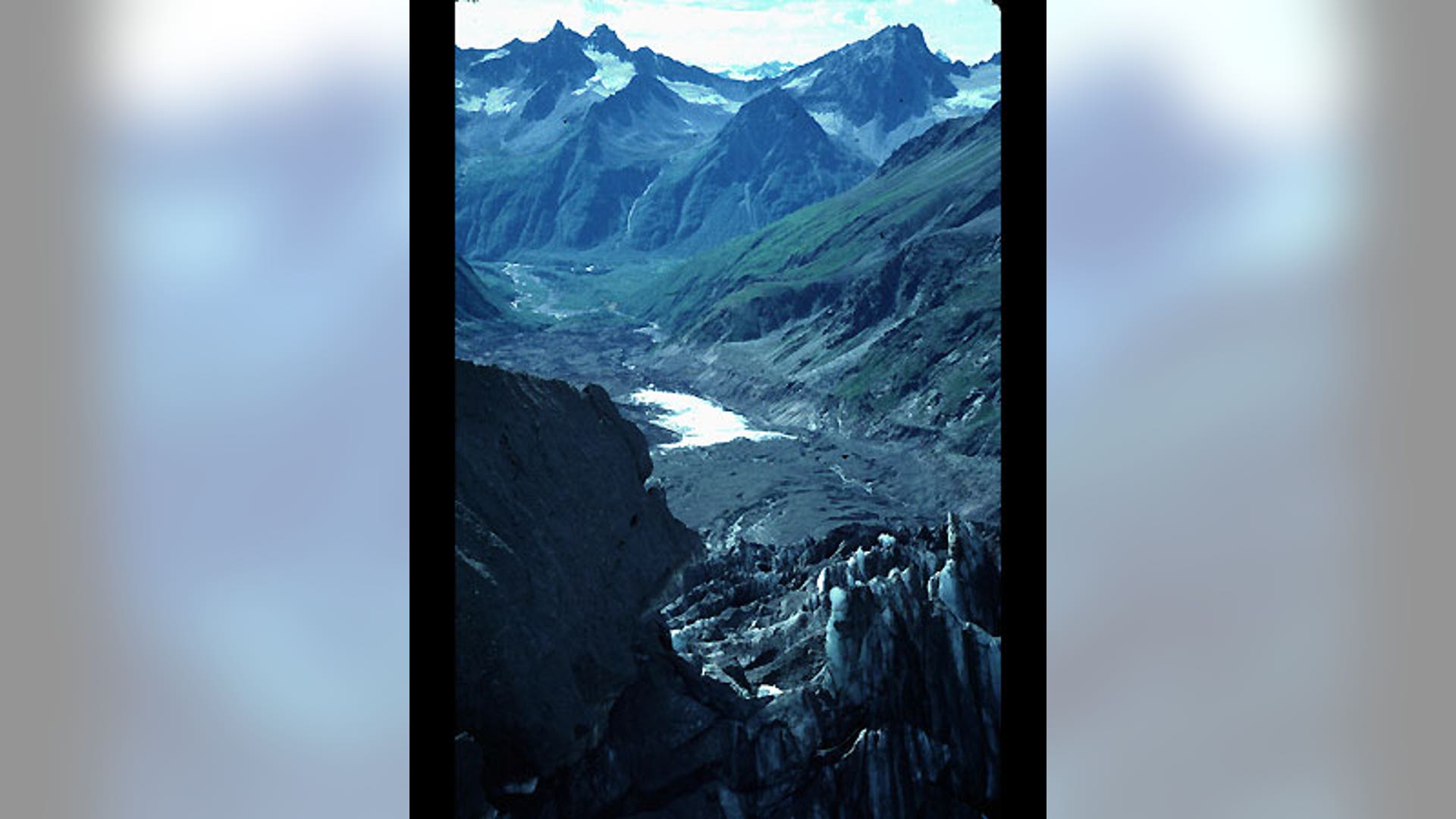
Dec. 18, 1989: Mount Redoubt during a continuous, low-level eruption of steam and ash.![Rumbling Mount Redoubt]() April 7, 1990: Hot pyroclastic flows during the 1989-1990 eruptions melted most of upper Drift glacier. Resulting floods threatened an oil storage-and-loading facility at the valley mouth. Debris of the pyroclastic flows thickly mantled the piedmont lobe of the Drift glacier (in foreground).
April 7, 1990: Hot pyroclastic flows during the 1989-1990 eruptions melted most of upper Drift glacier. Resulting floods threatened an oil storage-and-loading facility at the valley mouth. Debris of the pyroclastic flows thickly mantled the piedmont lobe of the Drift glacier (in foreground).![Rumbling Mount Redoubt]() April 10, 1990: The view west of Mount Redoubt . Drift glacier occupies the valley extending from the vent (at steam plume) to the valley bottom (visible in lower right).
April 10, 1990: The view west of Mount Redoubt . Drift glacier occupies the valley extending from the vent (at steam plume) to the valley bottom (visible in lower right).![Rumbling Mount Redoubt]() August 1990: The view southwest down the Crescent glacier on the south flank of Mount Redoubt. A hot pyroclastic surge during the eruption of Dec. 15, 1989 caused thick snowpack on the upper volcano flank to avalanche and partly melt. The glacier in the right middleground is blanketed (dark material at surface) by an an unusual ice diamict emplaced during the eruption.
August 1990: The view southwest down the Crescent glacier on the south flank of Mount Redoubt. A hot pyroclastic surge during the eruption of Dec. 15, 1989 caused thick snowpack on the upper volcano flank to avalanche and partly melt. The glacier in the right middleground is blanketed (dark material at surface) by an an unusual ice diamict emplaced during the eruption.












Move Forward
- Rumbling Mount Redoubt


