Move Back
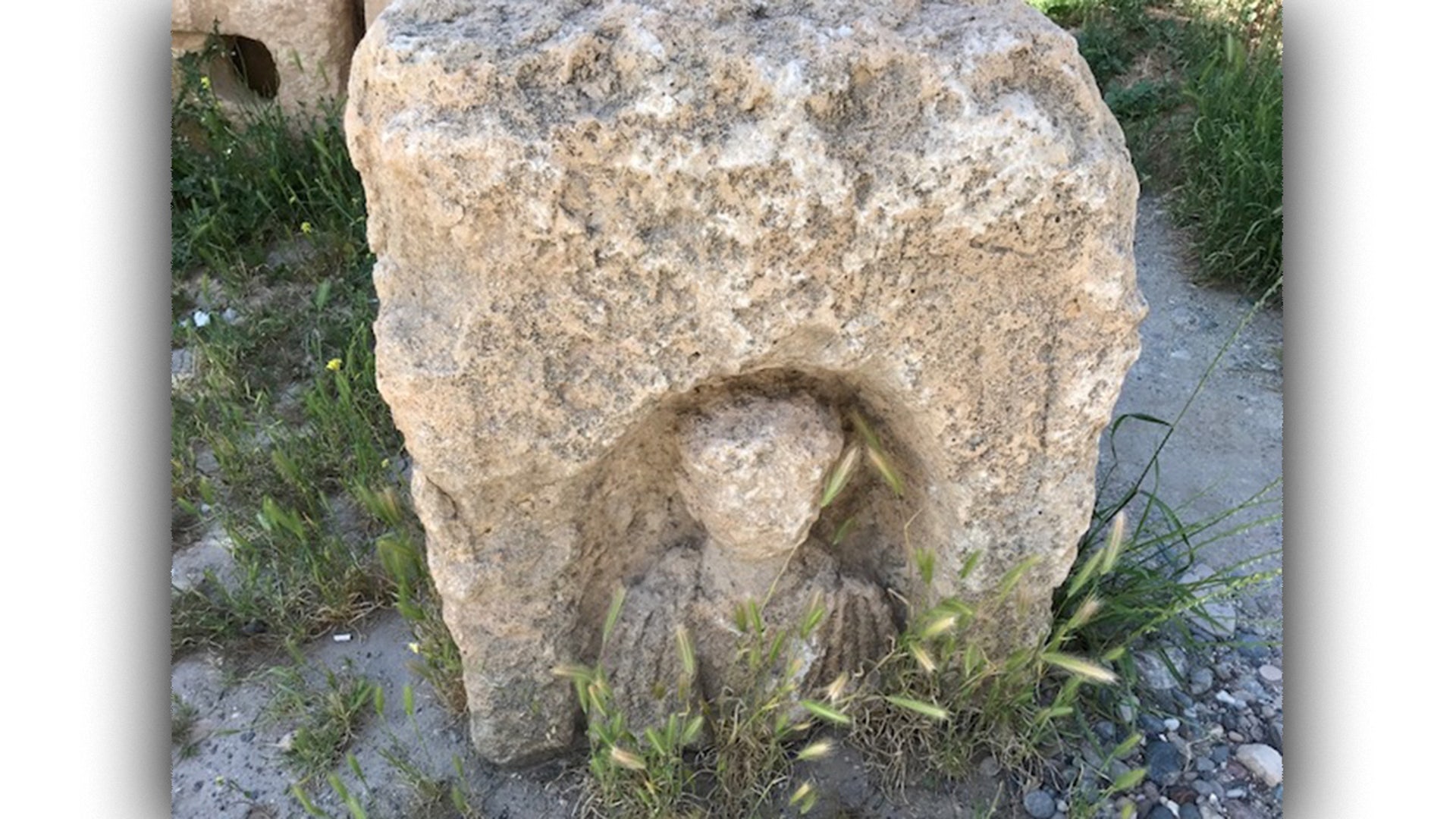
![Limestone Effigy]() This appears to be an effigy carved into a limestone building block. This is of a typical Roman style and there are similar busts found in tombs of the period. In tombs it would represent the deceased interred in the tomb.
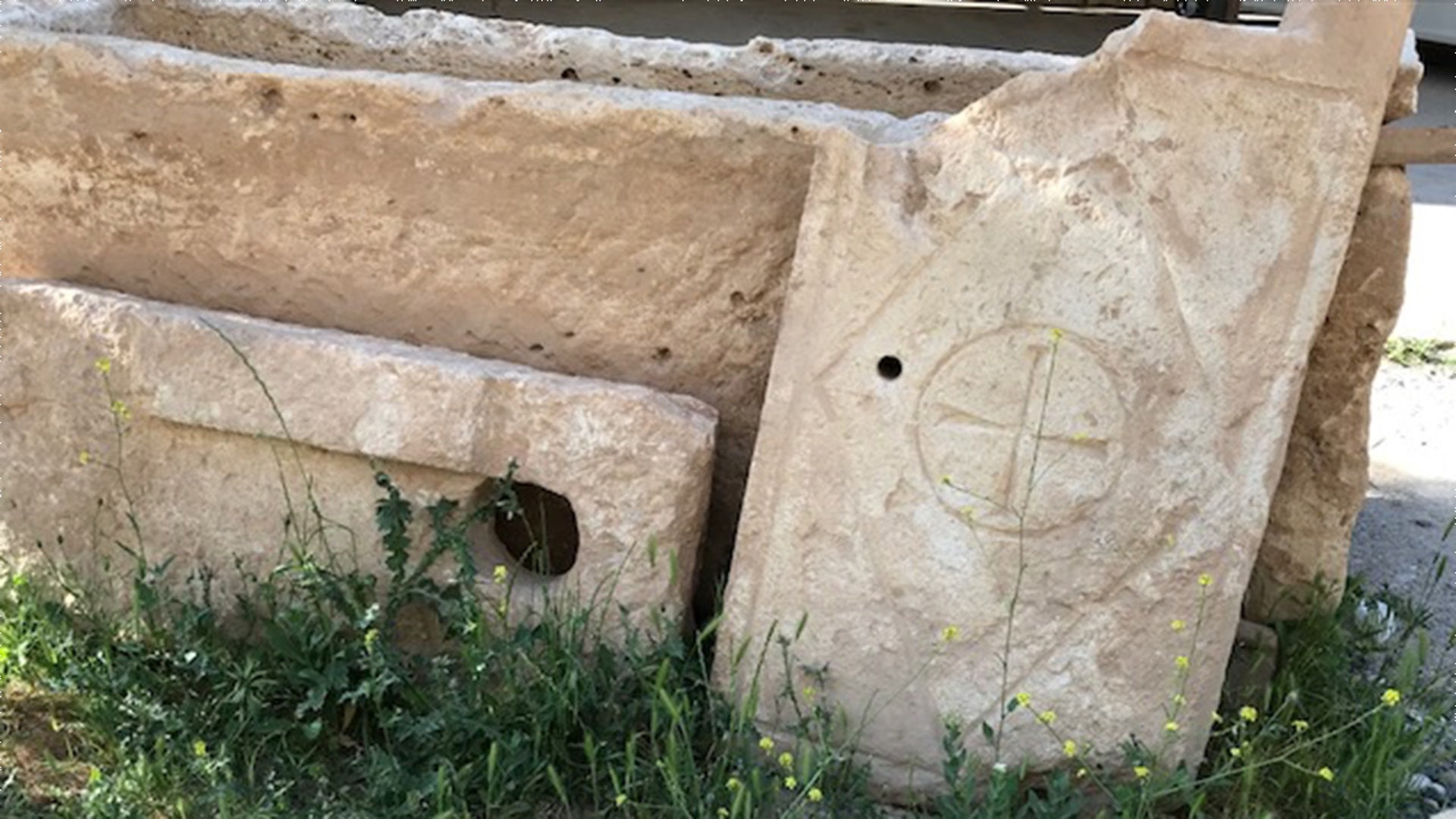
This appears to be an effigy carved into a limestone building block. This is of a typical Roman style and there are similar busts found in tombs of the period. In tombs it would represent the deceased interred in the tomb.![Sarcophagus]() The large artifact in this photo appears to be a sarcophagus, or stone coffin. Its name is derived from two Greek words that mean "flesh eater" because after a few months in the stone box all of the flesh is gone and only bones remain. The stone on the right, which may be a sarcophagus lid, has a cross carved on it.
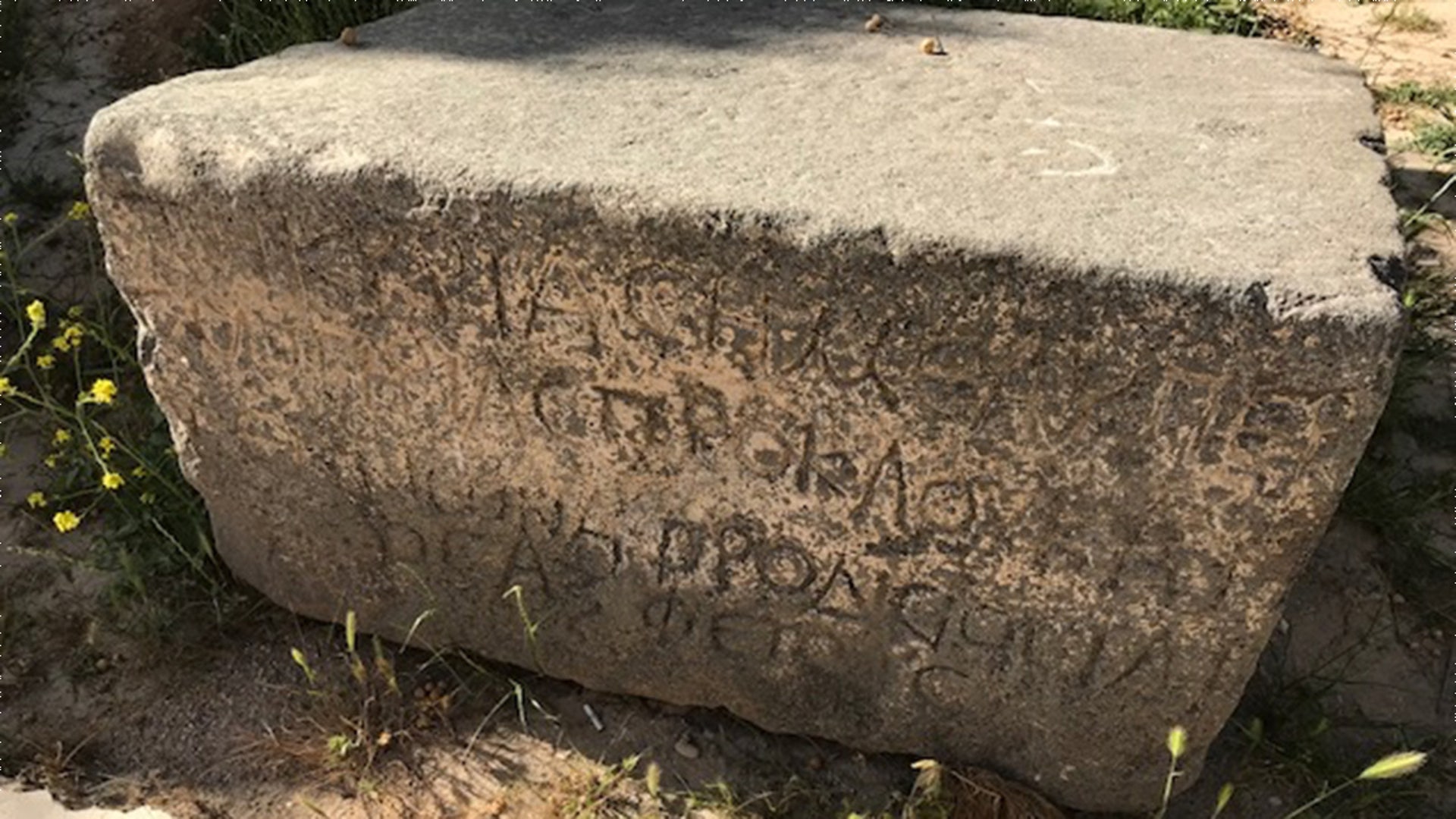
The large artifact in this photo appears to be a sarcophagus, or stone coffin. Its name is derived from two Greek words that mean "flesh eater" because after a few months in the stone box all of the flesh is gone and only bones remain. The stone on the right, which may be a sarcophagus lid, has a cross carved on it.![Greek Inscription]() This is a Greek inscription on an architectural block, also from the Roman period. Greek was the common language of the Eastern Roman Empire and was widely known and used in this period. This explains why the New Testament was written in Greek during the Roman Period.
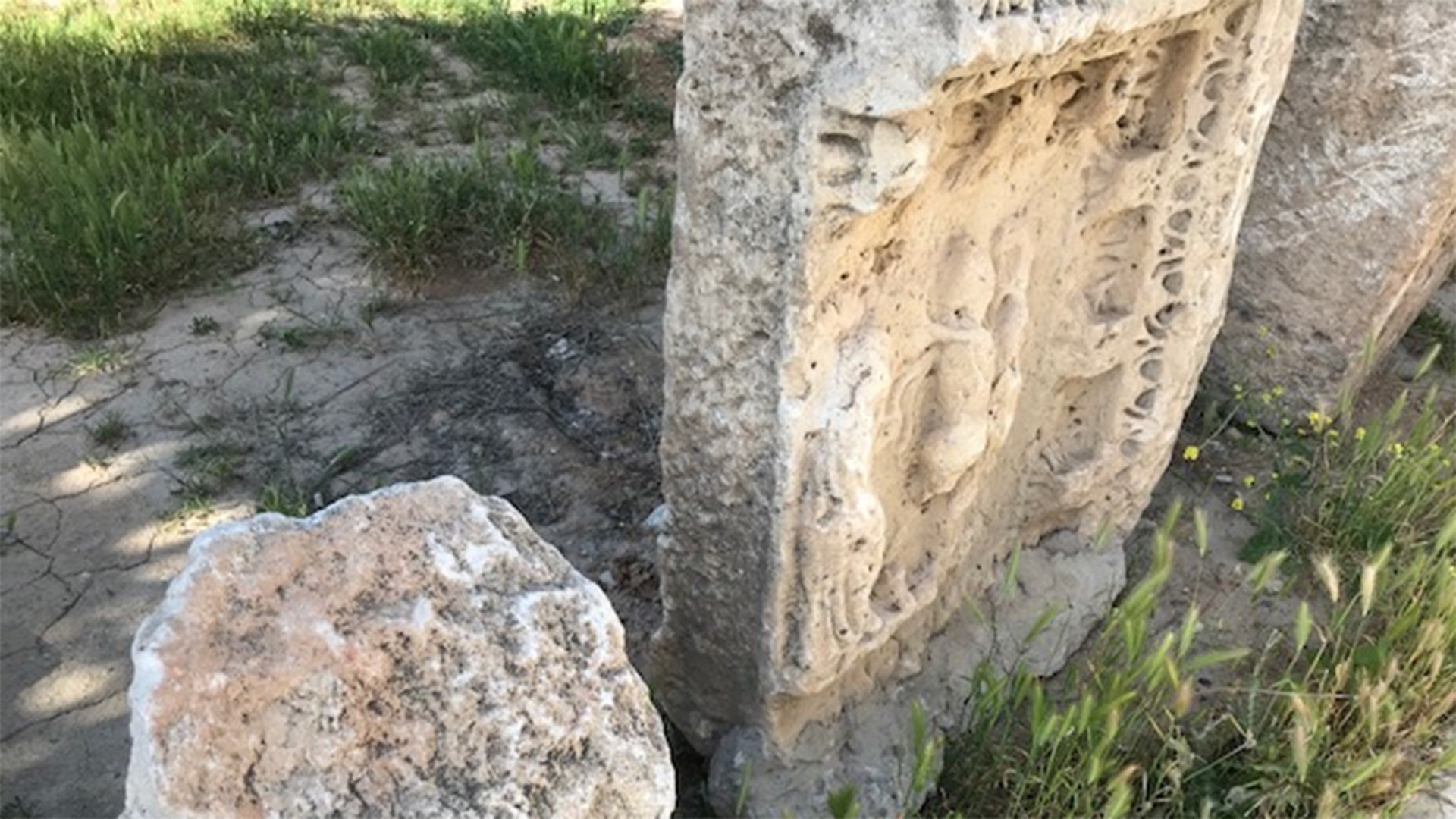
This is a Greek inscription on an architectural block, also from the Roman period. Greek was the common language of the Eastern Roman Empire and was widely known and used in this period. This explains why the New Testament was written in Greek during the Roman Period.![Grave Marker]() The center stone with the figure is Roman and might have been a grave marker.
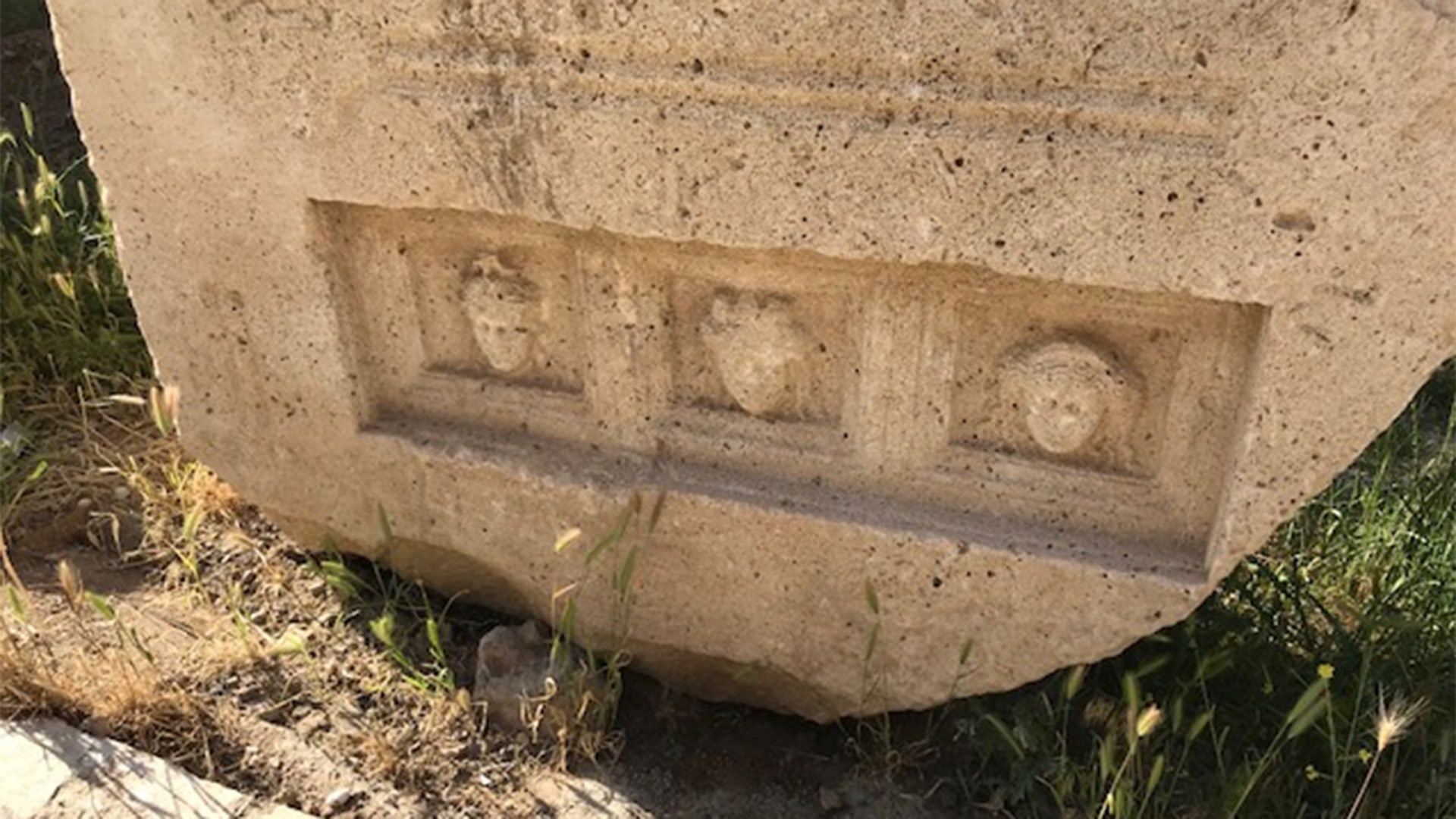
The center stone with the figure is Roman and might have been a grave marker.![Architectural fragment]() This is a Roman architectural fragment with three faces.
This is a Roman architectural fragment with three faces.![Cornice]() This appears to be roman architectural fragment of a building cornice.
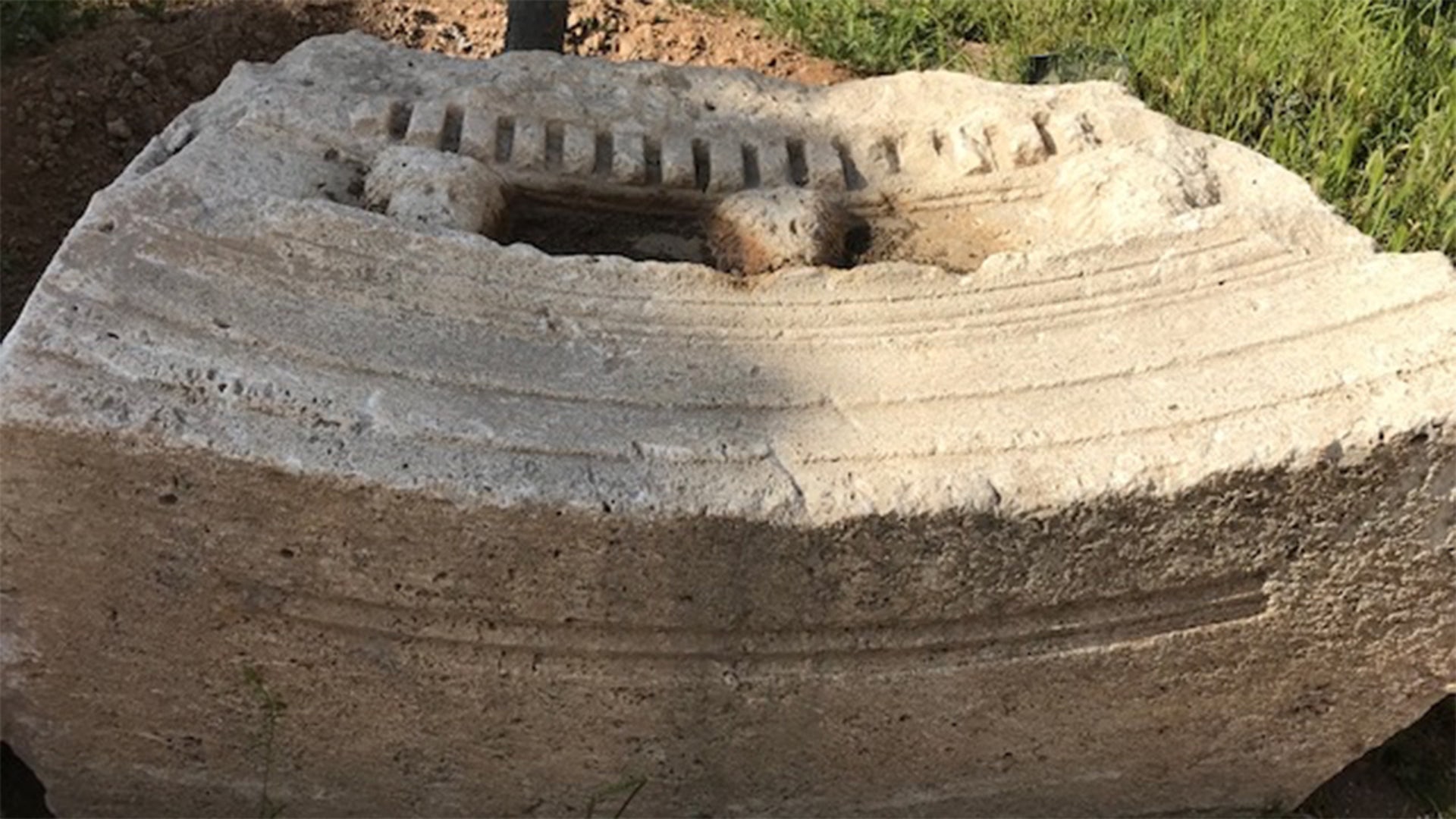
This appears to be roman architectural fragment of a building cornice.![Animal Heads]() Another Roman architectural fragment. The curved nature of this piece and the animal heads, which may depict lions, could have come from a public fountain.
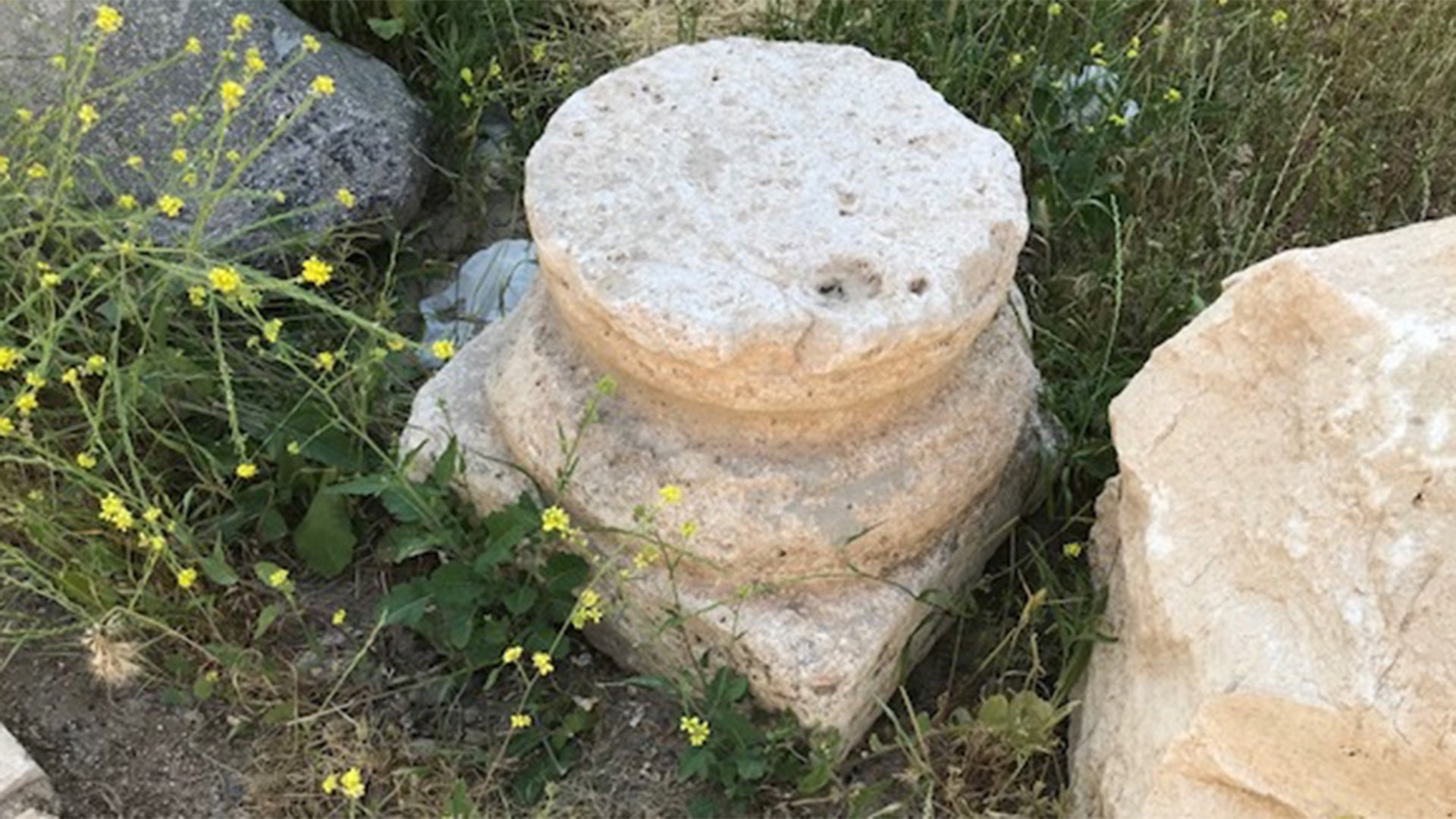
Another Roman architectural fragment. The curved nature of this piece and the animal heads, which may depict lions, could have come from a public fountain.![Column base]() The base of a Roman column discovered at the ancient site.
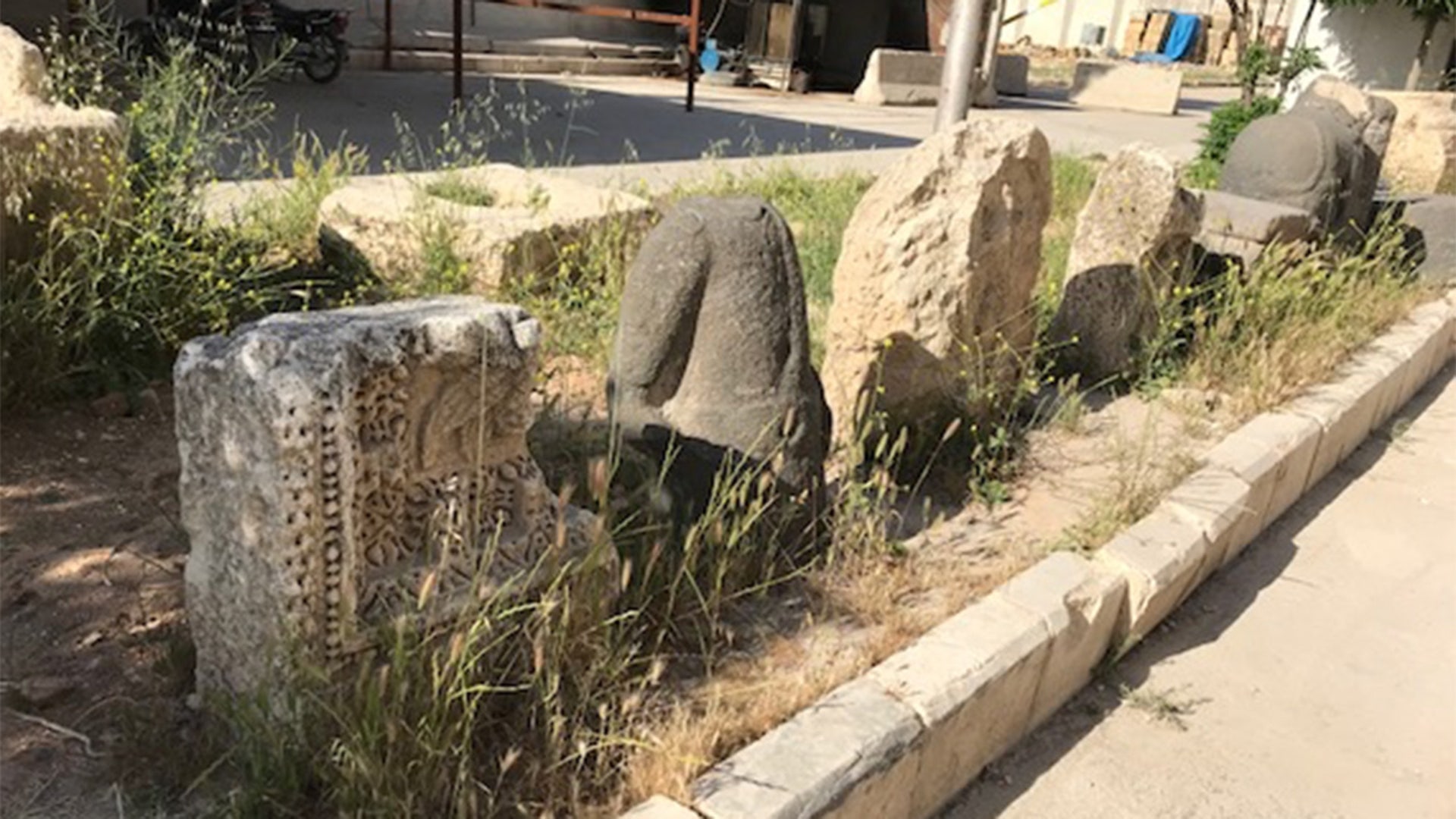
The base of a Roman column discovered at the ancient site.![Limestone and basalt figures]() This image shows Roman architectural pieces made of limestone and two basalt figures (dark stone).
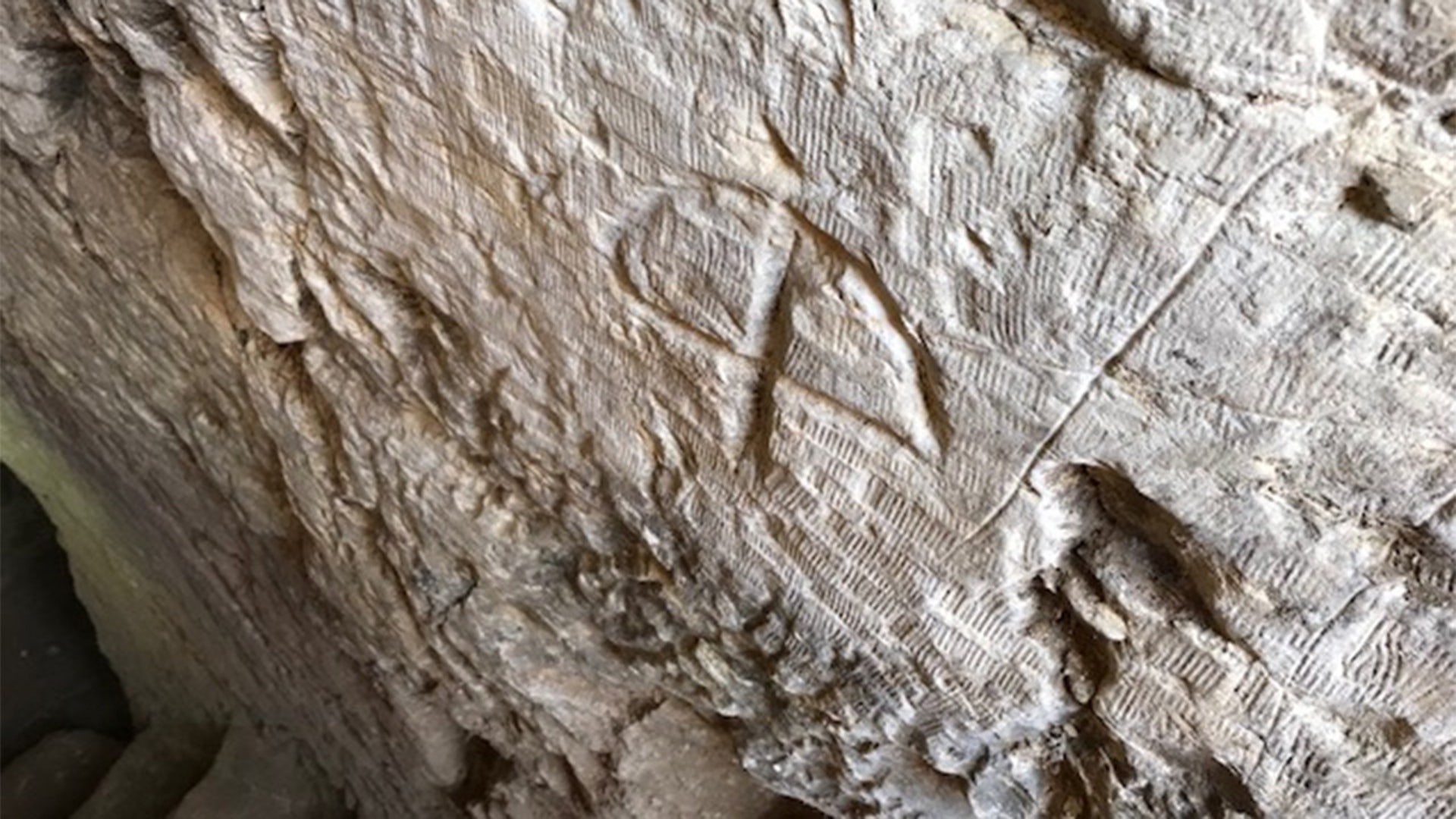
This image shows Roman architectural pieces made of limestone and two basalt figures (dark stone).![Tomb]() This appears to be a descending staircase - you can clearly see the chisel marks on the surface of the stone wall. During the Roman period tombs were carved into the soft bedrock. These tombs resemble rooms and can be elaborately decorated or simple in form. The cross was carved into the wall after the initial carving, which might indicate a secondary use of the tomb. It is not uncommon for tombs to be reused.
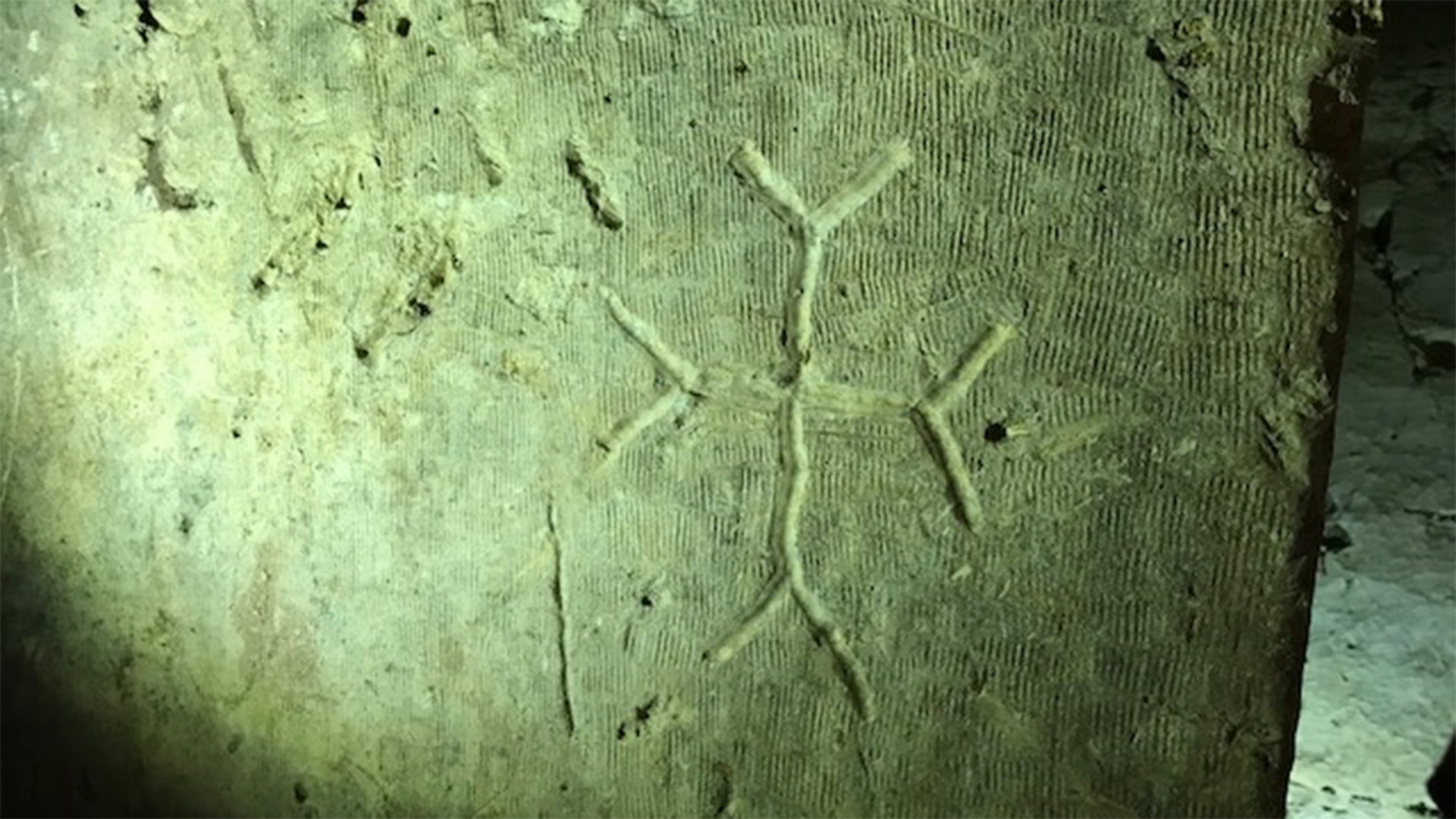
This appears to be a descending staircase - you can clearly see the chisel marks on the surface of the stone wall. During the Roman period tombs were carved into the soft bedrock. These tombs resemble rooms and can be elaborately decorated or simple in form. The cross was carved into the wall after the initial carving, which might indicate a secondary use of the tomb. It is not uncommon for tombs to be reused.![Christian symbol]() The tool marks are clear on this wall, as is the Christian symbol (cross), which is roughly carved into the wall.
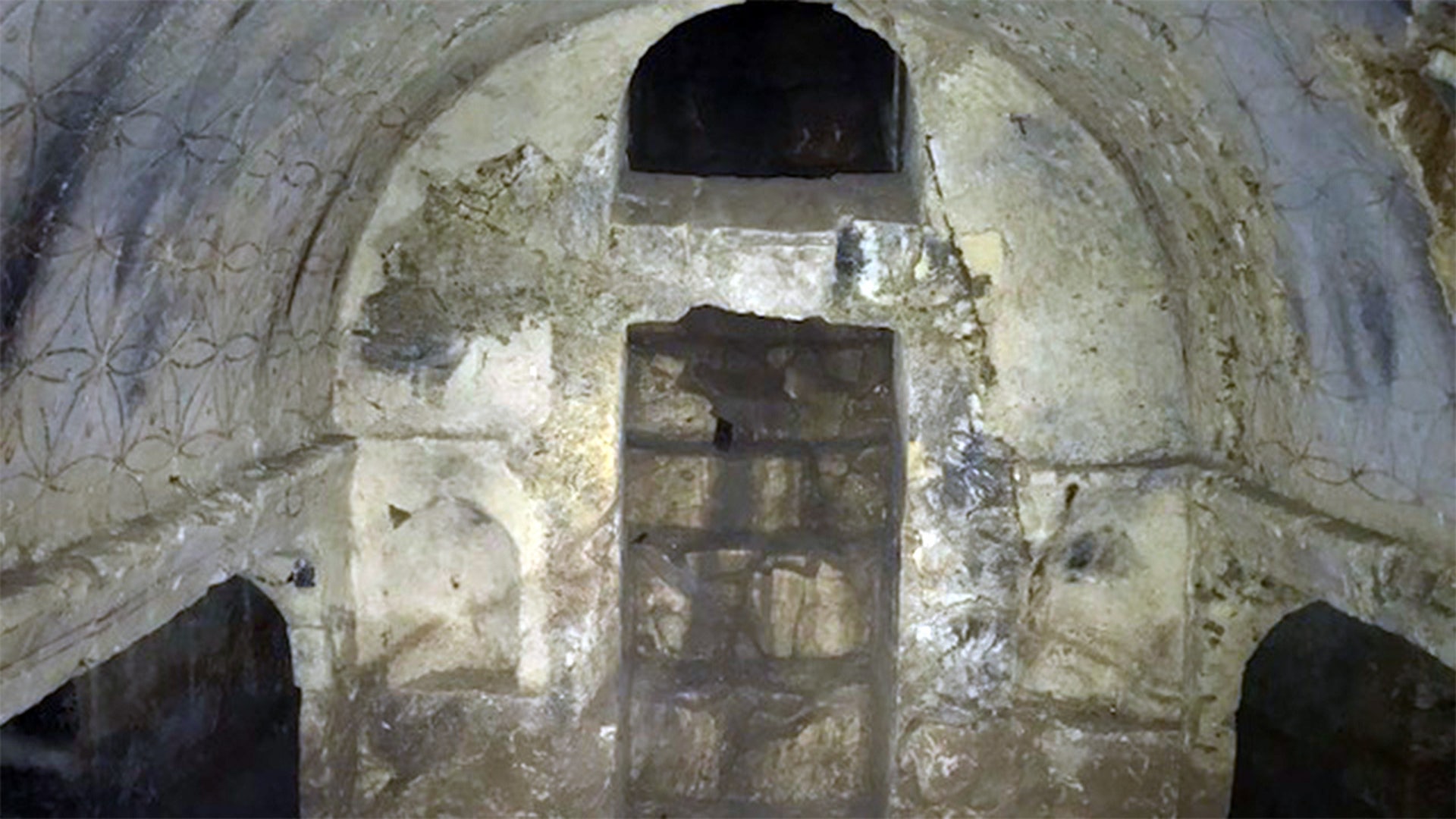
The tool marks are clear on this wall, as is the Christian symbol (cross), which is roughly carved into the wall.![Roman Tomb]() This appears to be a typical Roman-style tomb carved into limestone bedrock. These tombs, with arched ceilings and burial niches, were common in 2ND Century A.D.
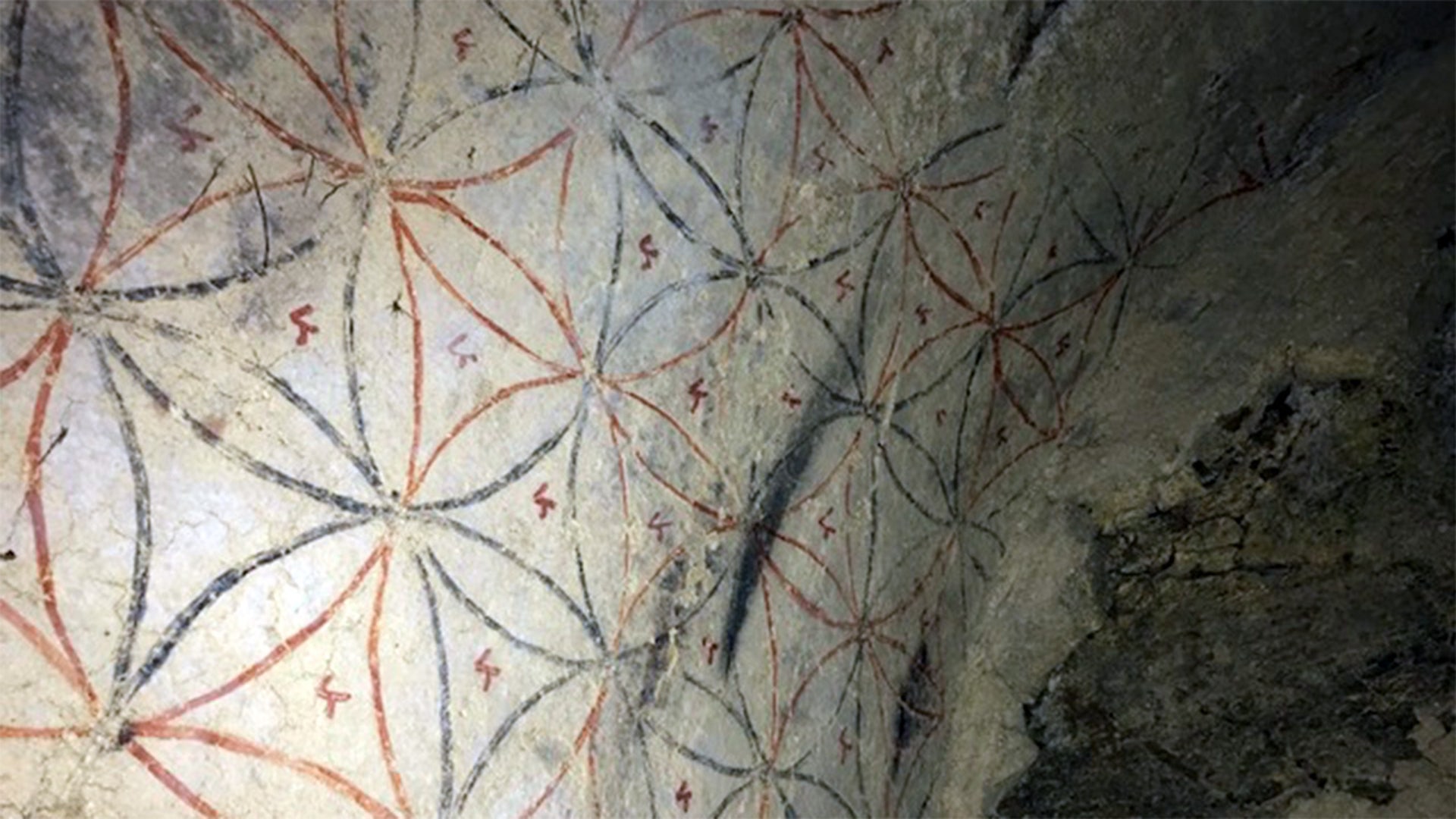
This appears to be a typical Roman-style tomb carved into limestone bedrock. These tombs, with arched ceilings and burial niches, were common in 2ND Century A.D.![Geometric Design]() This painted decoration is a typical geometric design used in Roman period tombs.
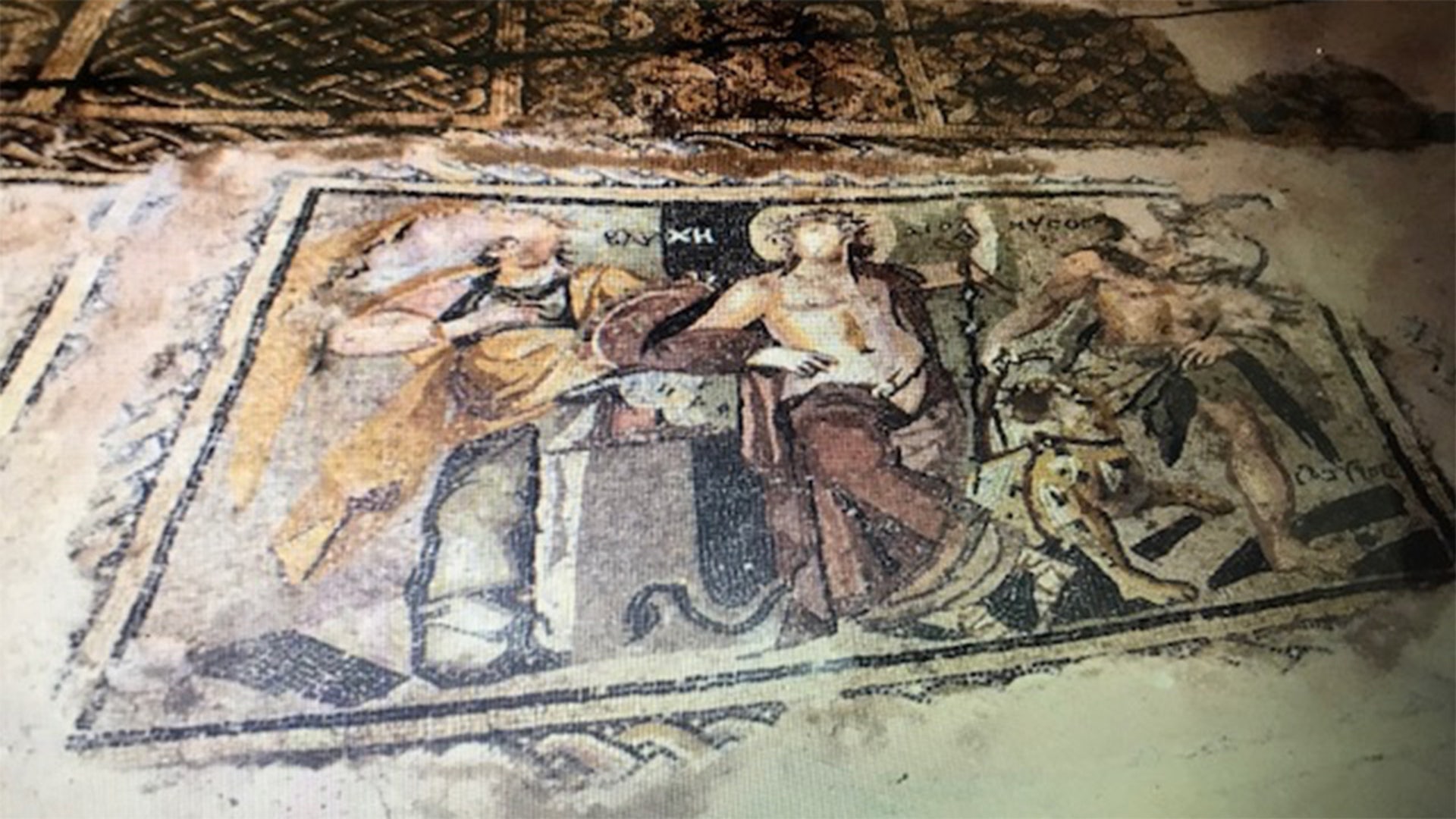
This painted decoration is a typical geometric design used in Roman period tombs.![Mosaics]() This image shows a large section of a Roman period mosaic with three central figures. Mosaics like this are common in fine Roman villas and public buildings. The figures often are personifications of various attributes.
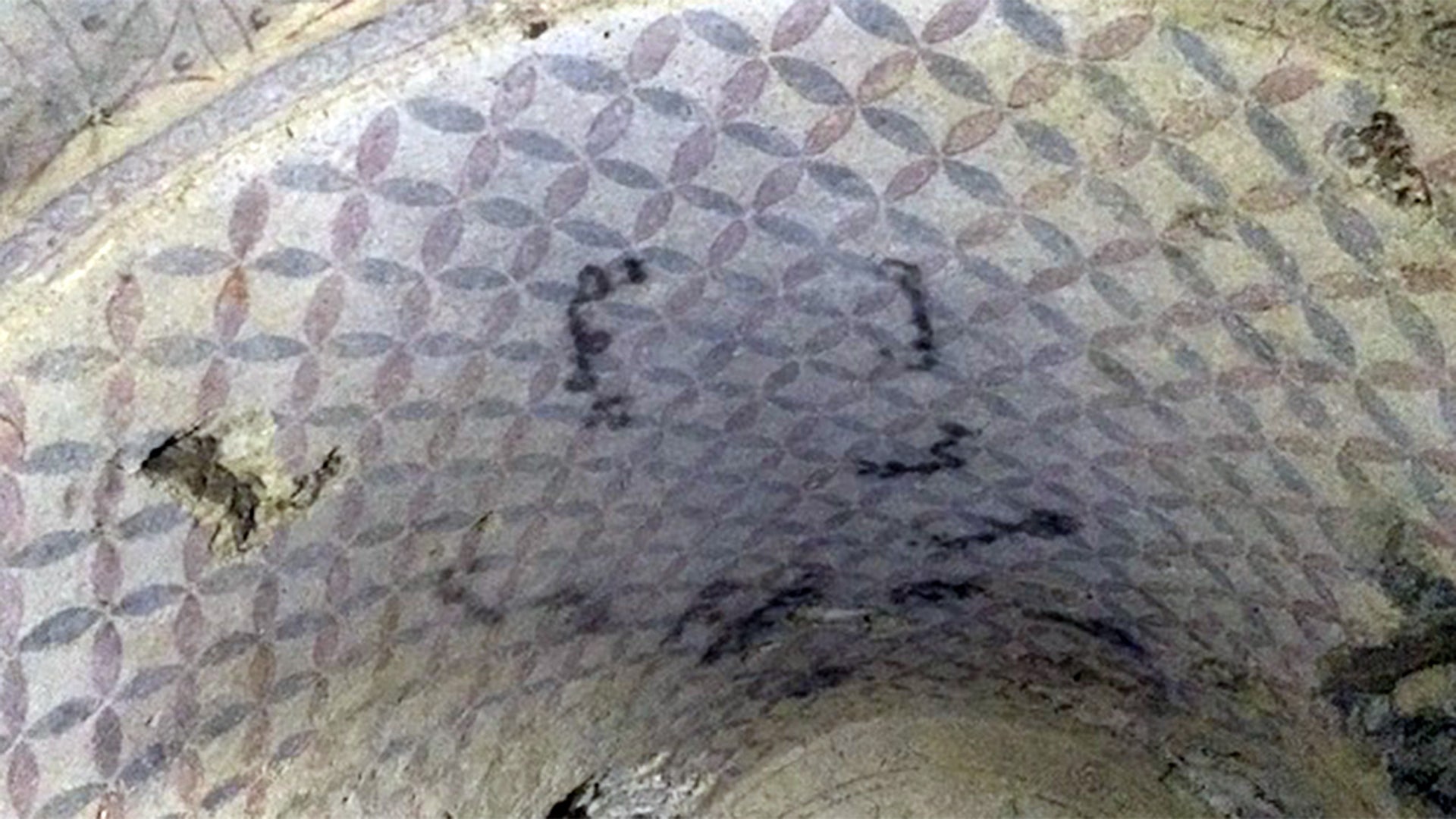
This image shows a large section of a Roman period mosaic with three central figures. Mosaics like this are common in fine Roman villas and public buildings. The figures often are personifications of various attributes.![Barrel Vault]() This barrel vault is decorated with a typical geometric design.
This barrel vault is decorated with a typical geometric design.Roman Empire Christian ruins discovered after ISIS pushed out of Syrian city
An ancient Christian site has been discovered in northern Syria.

Move Forward
- Roman Empire Christian ruins discovered after ISIS pushed out of Syrian city


