 Print
Print
 Close
Close

Supreme Court says Illinois congressman can sue over state mail-in voting laws
By Breanne Deppisch, Anders Hagstrom
Published January 14, 2026

The Supreme Court on Wednesday ruled that federal candidates have the right to challenge state election laws that govern the counting of ballots in their states, clearing the way for an expected flurry of new lawsuits in the run-up to this year's midterm elections.
Justices ruled 7-2 that candidates running for federal office have the standing to sue state election boards over their counting of ballots — including challenging laws that allow for the counting of late-arriving mail-in ballots.
Justices Ketanji Brown Jackson dissented, joined by Justice Sonia Sotomayor.
The ruling from the high court is expected to be hailed as a victory for Republicans ahead of the 2026 midterm elections, and comes as the high court is slated to consider a case more directly involving mail-in ballots later this year.
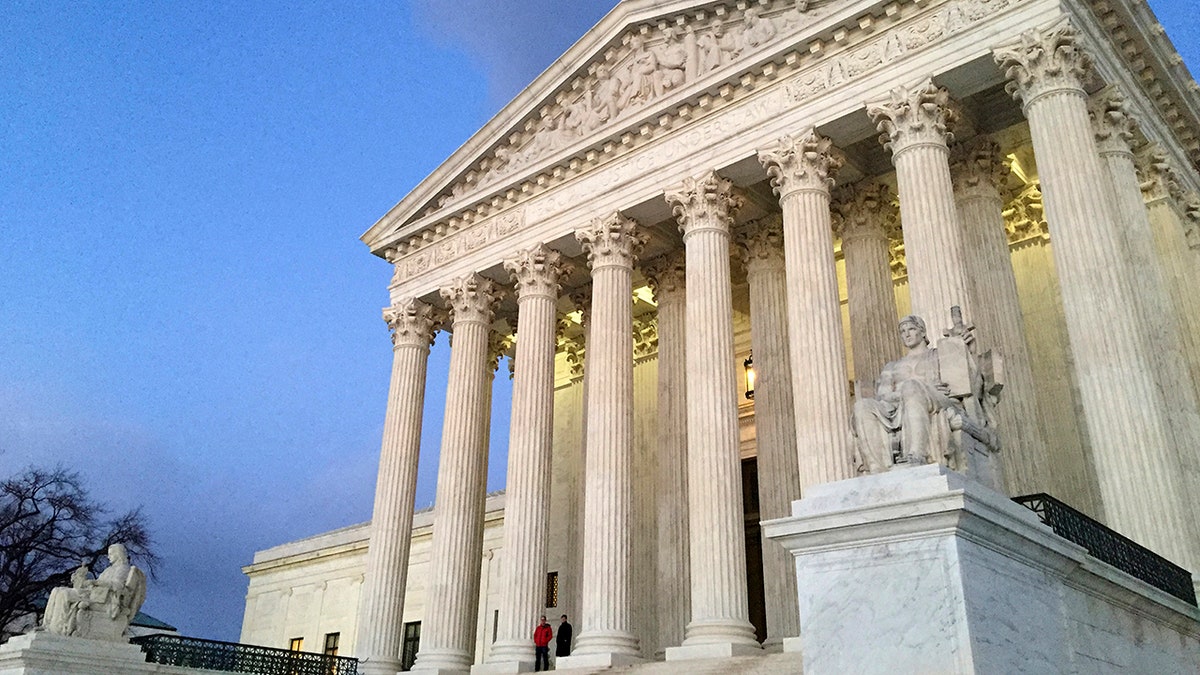
The Supreme Court building is seen in Washington, D.C. The Supreme Court ruled Wednesday that a Tennessee law banning transgender medical procedures for adolescents in the state is not discriminatory, ruling 6-3 to uphold the law. (AP/Jon Elswick)
At issue in the case is a lawsuit Rep. Mike Bost (R-Ill.), filed against the Illinois State Board of Elections in 2022 over its mail-in ballot policy, which allows for the counting of ballots received up to 14 days after Election Day.
READ THE SUPREME COURT OPINION – APP USERS, CLICK HERE:
A U.S. district court had originally concluded that Bost, who won the election, lacked the standing under Article III to challenge the election law. Federal courts require candidates to show that they have been individually harmed by the law.
SWING STATE’S SUPREME COURT ISSUES PIVOTAL RULING ON MAIL-IN BALLOTS SENT WITHOUT POSTMARK
That ruling was affirmed by the U.S. Court of Appeals for the Seventh Circuit, prompting Bost to appeal the case to the Supreme Court for intervention.
Bost and Republican plaintiffs urged the high court during oral arguments to allow candidates to sue even in cases where they cannot cite an individual grievance, or that the voting procedure caused them "concrete and particularized injury in fact."
Bost's lawyer Paul Clement urged the Supreme Court to also allow plaintiffs to consider broader, more general grievances that expand their view of "harm."
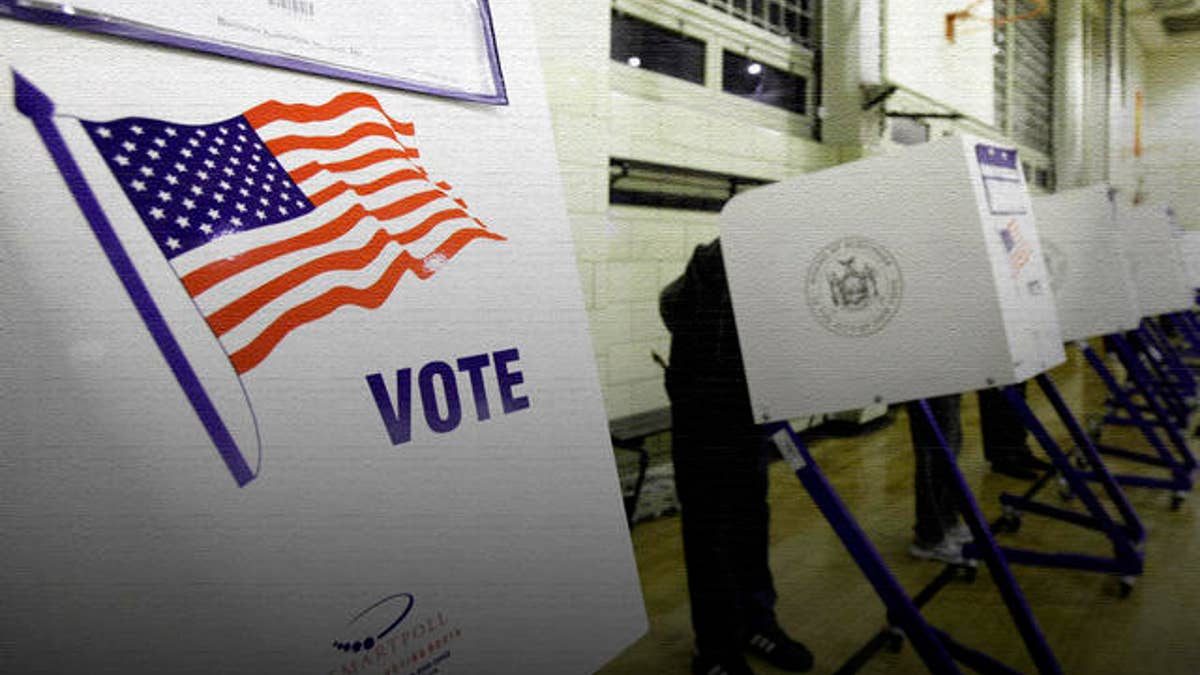
Voting machines on Election Day. A former Louisiana police chief and former city council member were given one-year prison sentences over a vote-buying scheme, the Justice Department said. (AP)
Candidates, he said, are not "mere bystanders" in an federal election. Clement noted they spend "untold time and energy" on their campaigns, thus adding untold additional amounts of money needed to cover the 14-day time period.
"If the campaign is going to be two weeks longer, you've got to keep the campaign staff together for two weeks longer, and that's going to be more expensive," he said.
JUSTICE ALITO PINS DOWN LAWYER WHO WON'T DEFINE BOYS, GIRLS IN COURT
Clement told the high court that preventing the case from moving forward risked turning "federal courts into federal prognosticators."
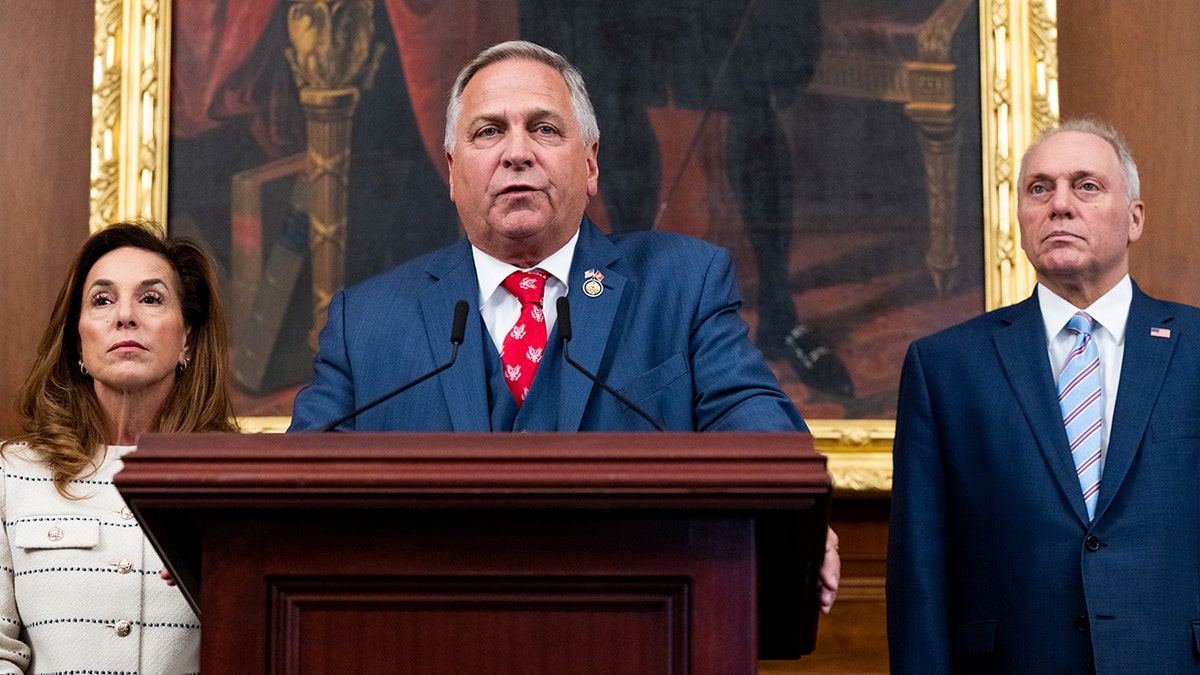
Illinois Republican Rep. Mike Bost speaks alongside Rep. Lisa McClain, a Republican from Michigan, and Rep. Steve Scalise, a Republican from Louisiana, during a news conference at the U.S. Capitol in Washington, D.C., on Thursday, Oct. 9, 2025. (Annabelle Gordon/Bloomberg via Getty Images)
Though the ruling itself is somewhat narrow, it comes as the Supreme Court is slated to other, more consequential cases this year — including a case centered squarely on the issue of mail-in voting.
That case, Watson v. Republican National Committee, which centers on states' ability to count mail-in ballots that are received within five days of an election.
CLICK HERE TO GET THE FOX NEWS APP
The RNC and state GOP have argued that these laws break with federal voting laws — a point vehemently disputed by other states and the DNC, which noted the widespread use of mail-in votes across the country, and the fact that similar laws are in place in some 31 states, including the District of Columbia.
https://www.foxnews.com/politics/supreme-court-says-illinois-congressman-can-sue-over-state-mail-in-voting-laws