 Print
Print
 Close
Close

Mamdani's inauguration fuels debate over Gen Z shift toward socialism, away from free markets
By Leo Briceno
Published January 02, 2026

New York City’s new mayor wasted little time drawing ideological lines, using his swearing-in ceremony to double down on campaign promises filled with government-led solutions — a sharp contrast with free-market principles Republicans warn are increasingly under threat amid an evolving understanding of socialism among younger audiences.
"We will draw this city closer together," Zohran Mamdani, a socialist, said at his ceremony on Thursday. "We will replace the frigidity of rugged individualism with the warmth of collectivism. If our campaign demonstrated that the people of New York yearn for solidarity, then let this government foster it."
His aims were echoed by his supporters at his inauguration — including Rep. Alexandria Ocasio-Cortez, D-N.Y., one of the most progressive lawmakers on Capitol Hill.
"We have chosen that over the distractions of bigotry and barbarism of extreme income inequality," Ocasio-Cortez said of Mamdani's visions for government-led programs like universal child care.
GOP WARNED TO TAKE ACTION OR 'LOSE' GEN Z VOTERS AFTER MAMDANI WINS NYC MAYOR RACE
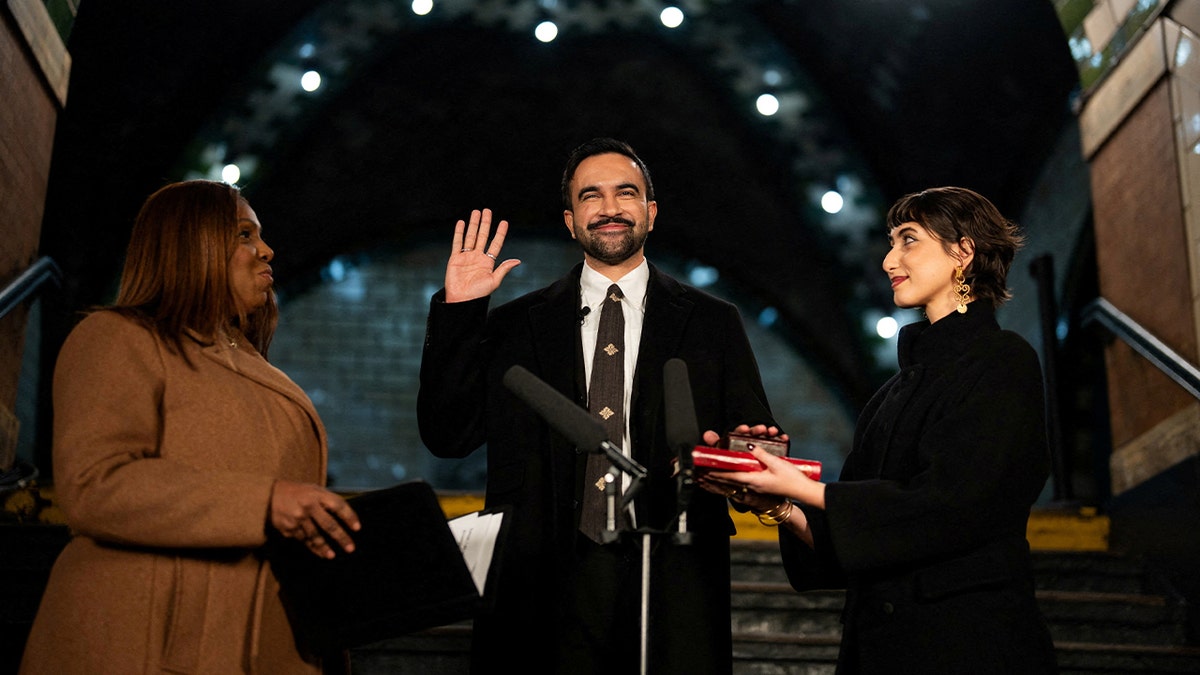
Mamdani is sworn in as mayor on a pair of family Qurans. (Amir Hamja/Pool via Reuters)
Mamdani's victory over independent candidate Andrew Cuomo was made possible in part by his stunning success among younger voters ages 18-29. Exit polling from the election's results indicated he captured as much as 75% of that vote.
Ronald Suny, professor emeritus of political science and history at the University of Chicago, said the support of younger voters for an openly socialist candidate didn't come as a surprise.
"Socialism has now become the catchphrase for the opposition to free-market or neoliberal capitalism, which is the idea that the market can do it all. Huge swaths of the lower and middle classes have not increased their well-being or their real incomes in the last 50 years," Suny said.
Suny believes younger audiences have embraced socialism as a way to describe an ideal — even if they don't have a good sense of what socialism means in practice. That's dovetailed with the rise of Mamdani and other progressives promising to use the power of government to create a more even playing field on issues like the cost of living, housing, transportation and healthcare.
It's a semantic change, some argue.
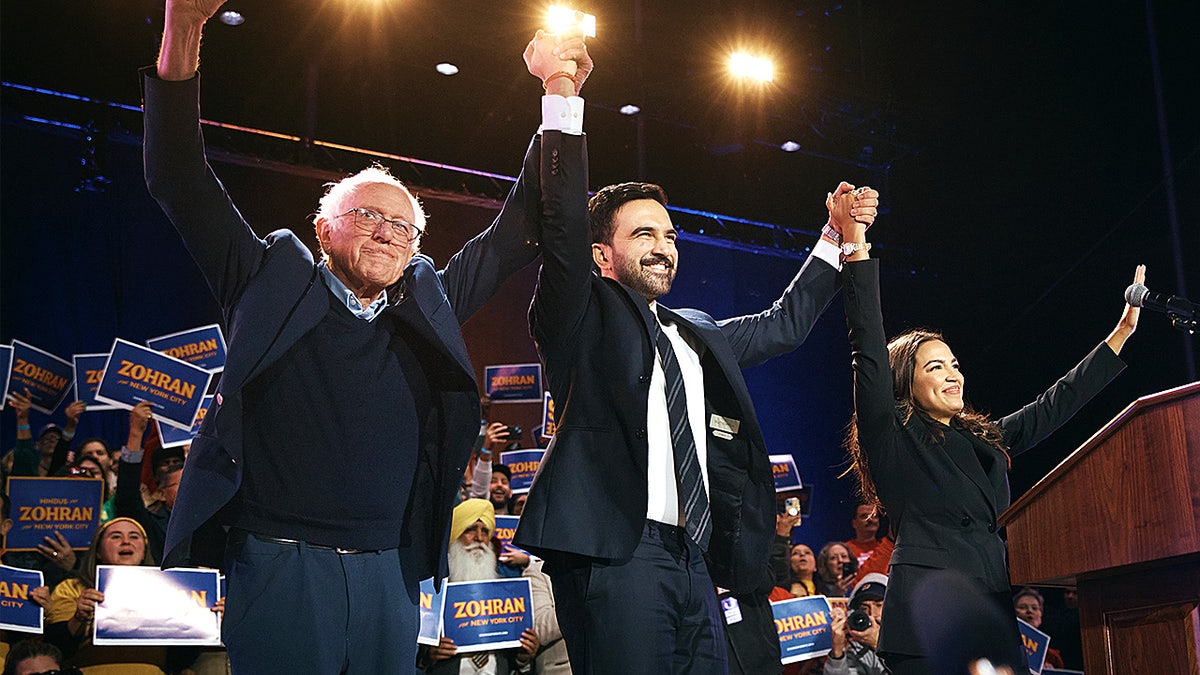
Then-New York City mayoral candidate Zohran Mamdani, center, celebrates with Sen. Bernie Sanders, left, and Rep. Alexandria Ocasio-Cortez, right, during an election rally at Forest Hills Stadium in Queens, Oct. 26, 2025. (Andres Kudacki/Getty Images)
Jason Palmer, co-founder of TOGETHER!, a youth-centered organization that promotes political engagement at the collegiate level, first noticed a change in the way students talked about socialism around three years ago.
"I started noticing it about 2022 — and it's really connected to affordability. A lot of young people feel like nothing is affordable to them. They can't buy a house. One thing that came up a lot on the campaign trail is they can't even afford to pay the rent deposit," Palmer said.
"I've spoken to a lot of them, and I always ask them, ‘What does socialism mean to you?’ They say, ‘Well, I don't know the official definition, but here's what it means to me. It means equality, it means fairness, it means an even playing field with higher taxes on the rich, a more equitable society.’"
ARE AMERICANS READY FOR THE REALITY OF SOCIALISM?
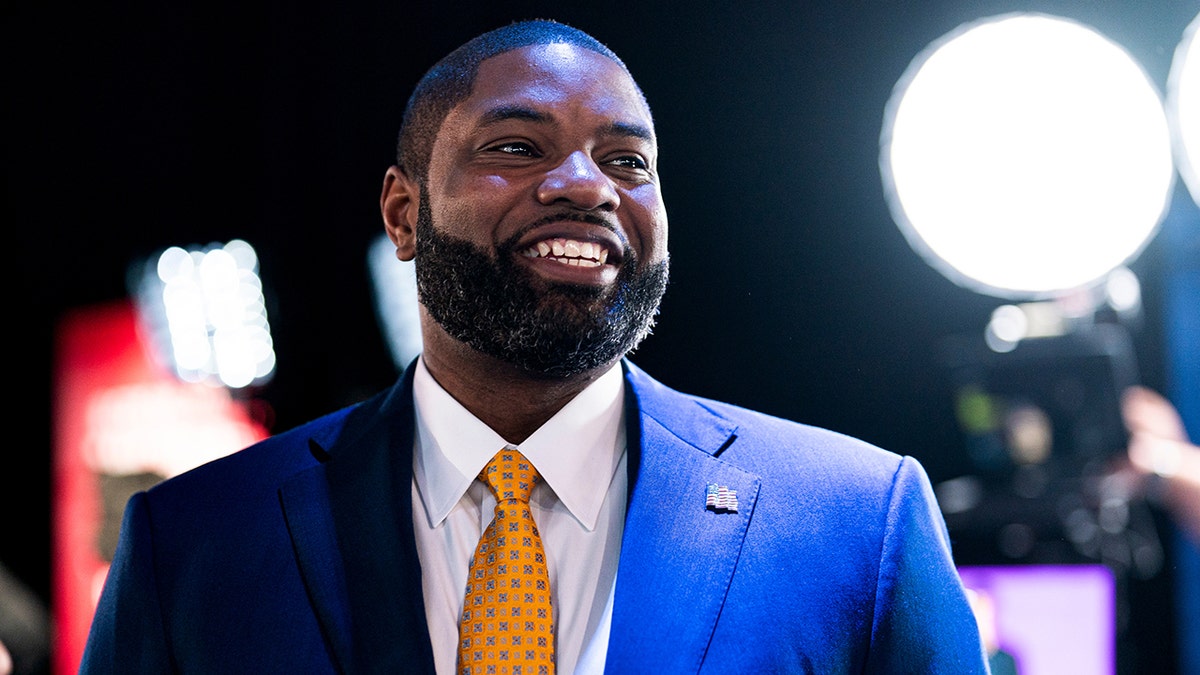
Rep. Byron Donalds, R-Fla., in the spin room ahead of the first vice presidential debate at the CBS Broadcast Center in New York, Oct. 1, 2024. (Al Drago/Bloomberg via Getty Images)
Rep. Byron Donalds, R-Fla., attributed shifts in how socialism is viewed to shortcomings in education.
"Our K-12 system — we failed to actually educate people about the implications of economic policy and the way it overlays into cultural frameworks of societies," Donalds said. "[Socialism] empowers government, makes government be more heavy-handed, driving choices, as opposed to letting people do that."
Donalds' concern stems from his conviction that socialism is at odds with the principles of American freedom. In his view, it's overly reliant on a top-down power structure.
"It always leads to a destruction of liberties," Donalds said. "There has to be some omnipotent person at the top who makes all the decisions."
Donalds pointed to the mass starvation and political repression of socialist regimes in Cuba, North Korea, China and Venezuela.
Fellow Republican Rep. Maria Elvira Salazar, R-Fla., echoed similar alarm as she introduced a bill condemning the horrors of socialism earlier this year.
"I represent district No. 27 in Miami, Florida — a bastion of hundreds of thousands of Cubans, Nicaraguans and Venezuelans who have fled, who have escaped from despicable horrors you cannot imagine produced by that ideology," Salazar said in a floor speech.
But Suny, who studies social change in socialist countries, believes that political framing in the U.S. has inadvertently contributed to a renewed interest in socialism. He argues that younger voters might find themselves unconvinced by a repeated emphasis on socialism's most grievous failures and don't see mass starvation in the cards when politicians float government-led child care programs or government-owned supermarkets.
"[Critics] don't emphasize elements like turning peasant countries into industrial countries, village countries into urban countries, teaching literacy to the whole population, a number of other things, right?" Suny said.
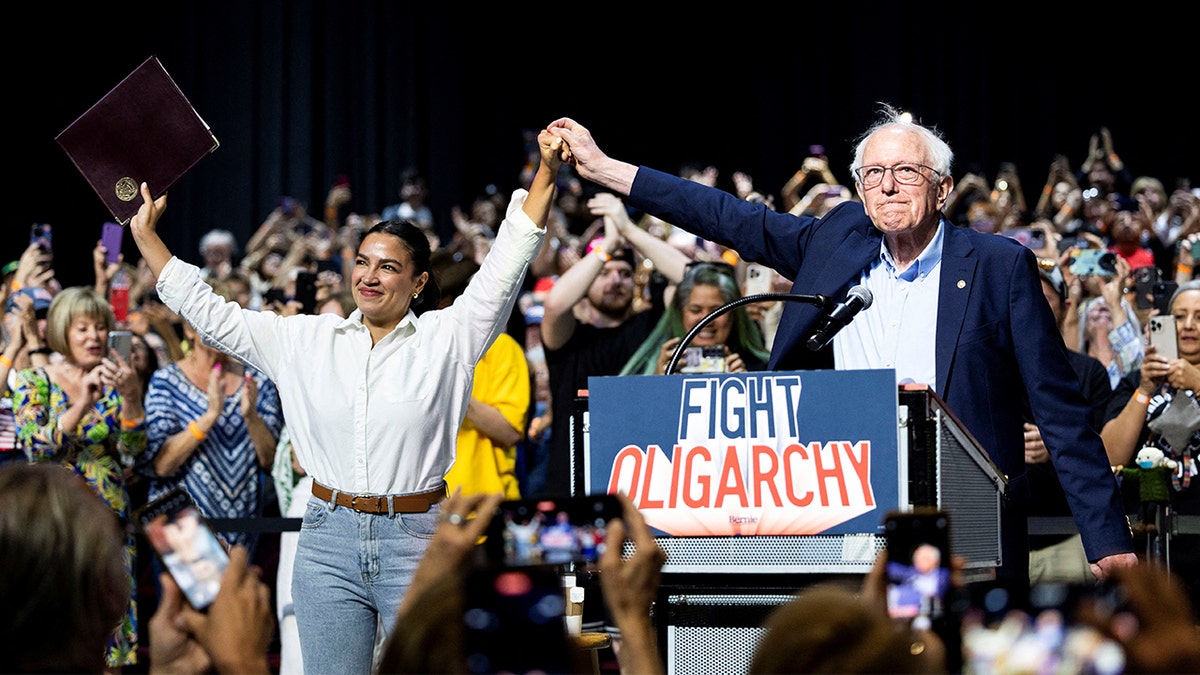
Rep. Alexandria Ocasio-Cortez, D-N.Y., and Sen. Bernie Sanders, I-Vt., participate in a stop on the "Fighting Oligarchy" tour at the Dignity Health Arena in Bakersfield, Calif., April 15, 2025. (Aude Guerrucci/Reuters)
Palmer, the co-founder of TOGETHER!, noted that shifting understandings of socialism may vary greatly regionally. He pointed out that Mamdani’s success in New York would likely prove less effective among young voters in Virginia, Pennsylvania or other states.
CLICK HERE TO GET THE FOX NEWS APP
"It does play differently with different audiences," Palmer said.
Polling by Gallup last year showed that approval surrounding capitalism sank nationally with younger audiences, while socialism’s standing rose. Only 31% of Democrats under 50 have a positive view of capitalism, a drop from 54% in 2010.
Inversely, Gallup's findings also showed that the favorability of socialism climbed among younger audiences. Notably, 49% of respondents between the ages of 18 and 34 said they held a positive view of socialism, while 46% said they held a negative view.
https://www.foxnews.com/politics/mamdanis-inauguration-fuels-debate-over-gen-z-shift-toward-socialism-away-from-free-markets